Fantasy · Pathfinder
Pathfinder 2e Review
From Paizo
Score
Hit
Blaine
- Rules
- 14/20
- Layout
- 16/20
- Setting
- 20/20
14 + 16 + 20 = 50 ÷ 3 = 16.7 , rounded to 17
Joe
No score/20Was on a side quest.
Filed under rulebooks and starter sets. How we score
What works
- Keeps the heart of Pathfinder 1e with the fat trimmed
- Grappling finally makes sense
- Encounter and treasure guidelines that make prep easy
- The remaster splits player and GM books, so players only buy what they need
- Golarion: a nation for any story you want to tell, in a world that changes
What doesn't
- Still crunchy, and a lot for new players
- Every class has its own feats to learn
- Combat stays tactical compared with lighter, story-first games
- Feats are scattered across the book
- Two core books now means two purchases
When D&D 3.5 gave way to 4e, I went looking for something else and found Pathfinder 1e. It's been my main system ever since. First edition was a min-maxer's dream: a mountain of feats and combinations, and a slog for anyone new to the table. Second edition kept the heart of it and trimmed the fat.
I'm not a fan of every modern change Paizo has made, and the 1e adventure paths were absolute fire. But as a system, second edition is a real step up.
What I reviewed
This covers Pathfinder 2e and the remaster. The biggest difference is the books: the remaster splits the old Core Rulebook into a Player Core and a GM Core. It also renamed some spells, items, and creatures when Paizo moved away from the OGL after Wizards of the Coast's licensing debacle. I've played and run it at my table.
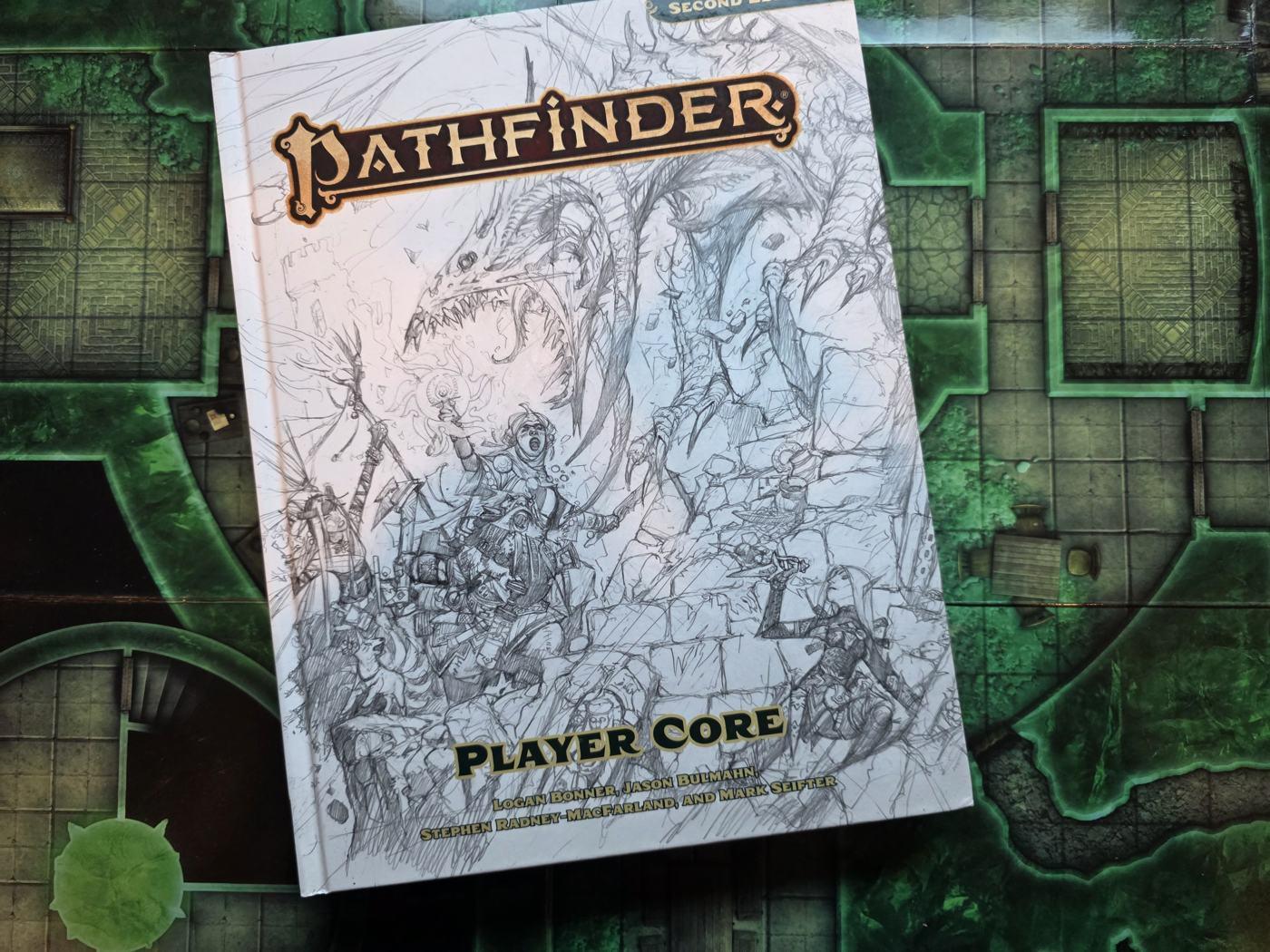
The Player Core comes in three versions: the standard hardcover, a Special Edition, and a smaller Pocket Edition.
Rules14/20
Coming from first edition, this is a huge improvement. It isn't perfect, and it's still crunchy, but that feels deliberate. Paizo wasn't trying to scare off everyone moving over from 1e. Second edition keeps things familiar and gives them a face lift.
Take grappling. In 1e, it took a master's degree in mathematics (only a slight exaggeration). In 2e, it just works.
And for prep, Pathfinder's encounter-building and treasure guidelines are the standard I judge every other game by.
It still has rough edges. There's a lot for a new player to absorb, since every class has its own feats, and combat stays tactical next to lighter, story-first games like Daggerheart. But it feels like old-school D&D, and I mean that as a compliment.
Layout16/20
It's a standard d20 layout. The original 2e Core Rulebook put the player and GM material in one book, which was handy right up until I needed a GM rule and a player needed that same book for their spells.
So I'm glad the remaster splits it into the Player Core and GM Core, even though two books means a second purchase. Players can pick up the Player Core without paying for GM pages they'll never read.
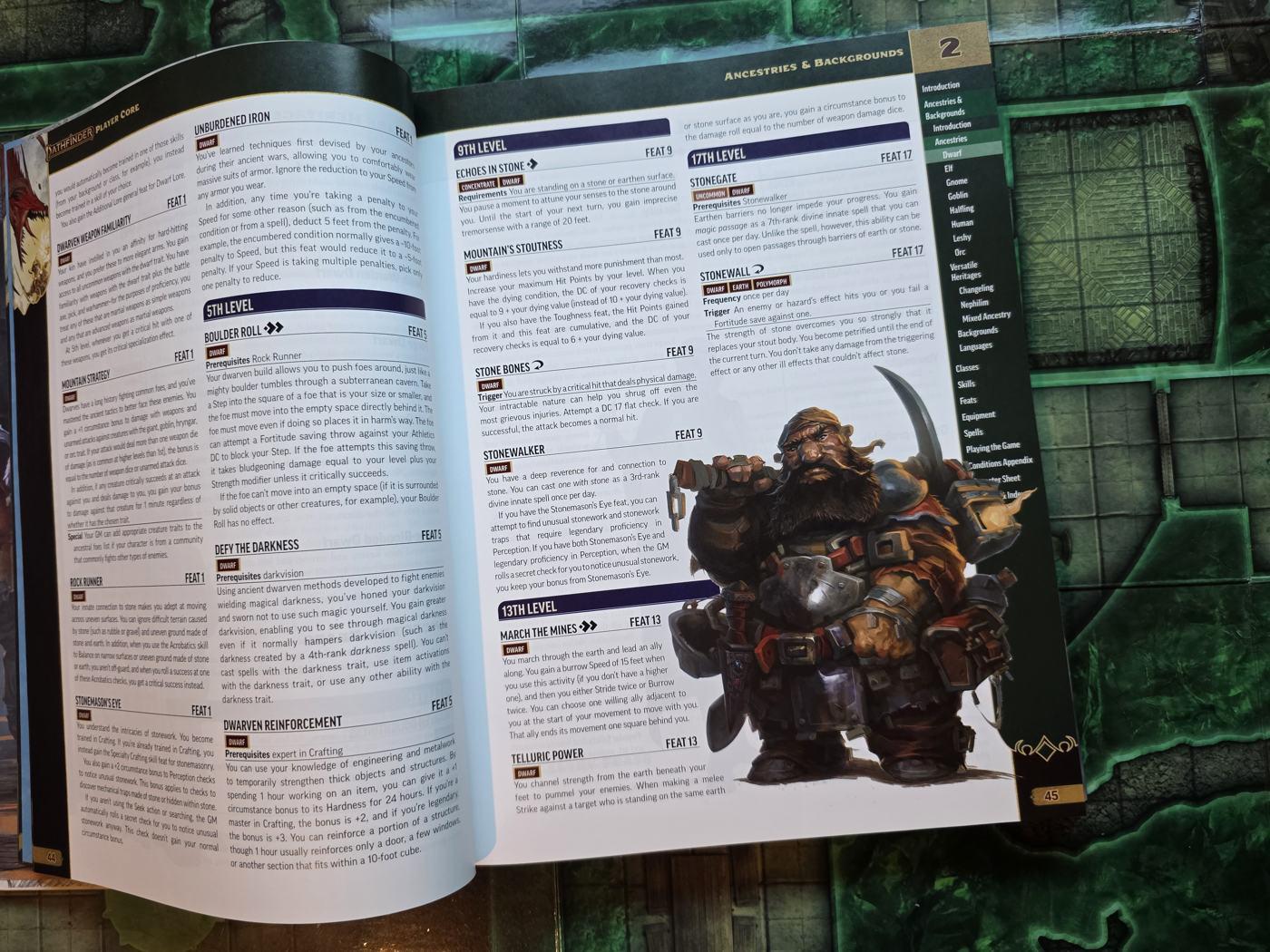
My one gripe is where the feats live. Ancestry feats are near the front, each class has its own, and general feats come after the skills chapter. I'm not sure there's a clean fix, but flipping between them gets old.
Setting20/20
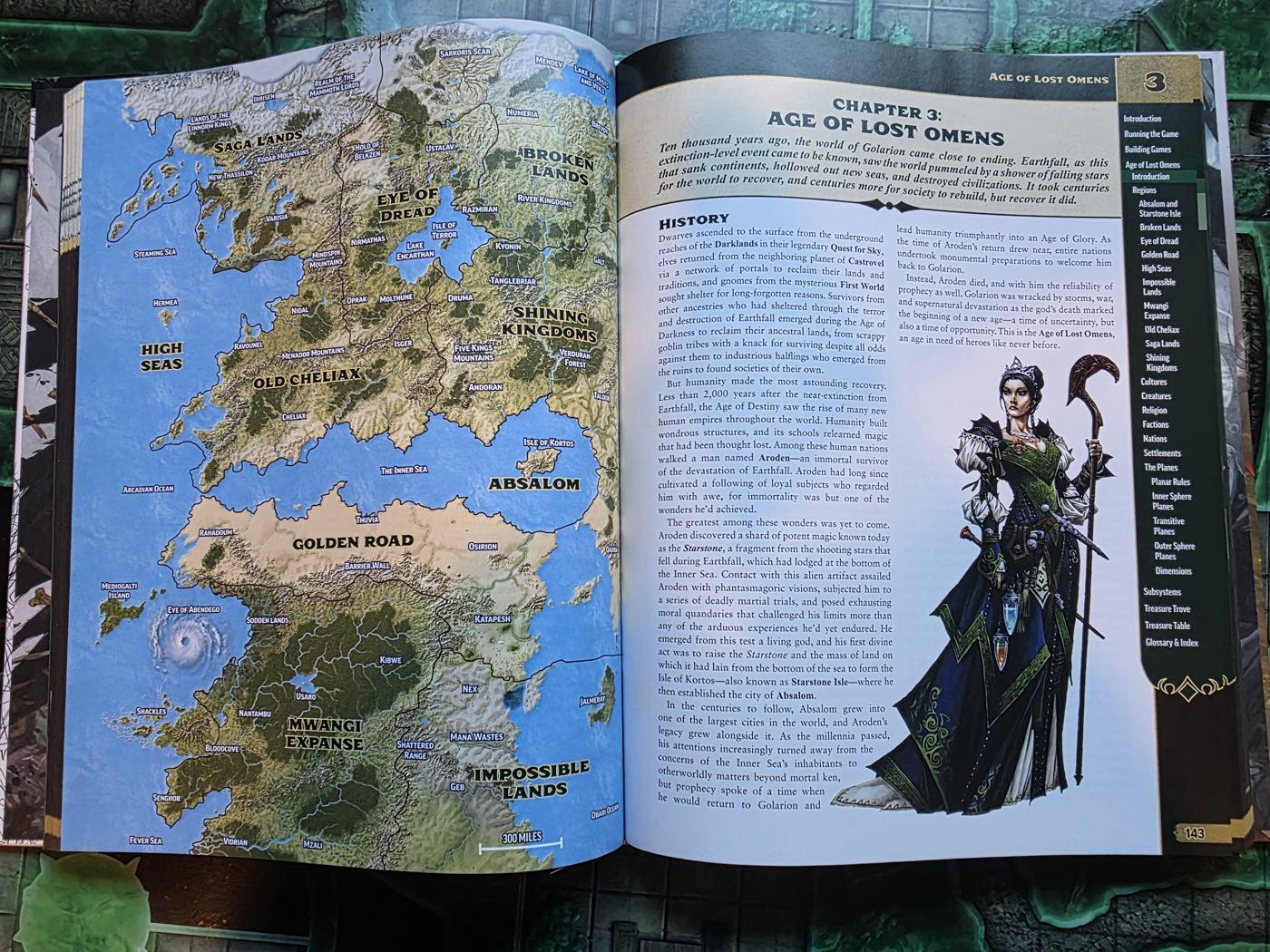
I'll admit I'm biased: I love Golarion. It's a fascinating world, and it doesn't stand still. The adventure paths change it, and those changes stick. There's a nation for whatever story you want to tell. Classic heroics? Varisia. Gothic horror? Ustalav.
I came from the Forgotten Realms, and I never thought I'd find another world that could match it. I used to turn my nose up at other settings. Then I found Golarion, and I haven't looked back.
Who it's for
Players who love crunch and tactical combat, GMs who want great prep tools, and anyone who misses the feel of old-school D&D. If your table wants something lighter and story-first, look at Daggerheart instead.
The verdict
A 17 out of 20, a Hit. Still crunchy, a big step up from first edition, and set in the best fantasy world I've played in.
Affiliate link. It costs you nothing extra, and we may earn a small commission. Rather we not get a cut? Here's the plain link.