Fantasy · Comedy · Dungeon Crawler Carl · Core Rulebook
Dungeon Crawler Carl Core Rulebook Review
A world made for a tabletop game and a rules engine with real ideas, buried under copied text, missing rules and a layout we both gave a 1. Big book, not a lot of new book.
Read-through: we read this cover to cover but haven't run a session with it yet. Scores reflect the book, not how it plays.
Filed under rulebooks and starter sets. How we score
What works
- Skills work like feats: as they rank up, they unlock new ways to use them
- Call a Play and the near miss turn helping a friend into a real decision
- The GM barely rolls, and bosses get an action per player, so fights feel dangerous
- Misc Junk turns the loot pile into anything you need, toaster included
- A world made for a tabletop game, with a System AI that can make your players' wildest theories true
What doesn't
- Whole blocks copied from the Starter Set you already had to buy
- Rules you need are scattered, and the book sends you leapfrogging to find them
- The shows, sponsors, the top ten list and crafting upgrades are left for the GM to invent
- No equipment lists, no prices and almost no traps
- $64.99, with gaps a season pass is meant to fill
Affiliate link. It costs you nothing extra, and we may earn a small commission. Rather we not get a cut? Here's the plain link.
We went in hoping the Core Rulebook would fix what was wrong with the Starter Set. It didn't. There's a good game in here somewhere, and the world is one of the best ever made for a tabletop game. But this 646-page book reuses whole sections of the Starter Set you already had to buy, scatters the rules you need, and leaves most of the game's own premise for the GM to invent. We both gave the layout a 1. Big book. Not a lot of new book.
A correction from Blaine
In our Starter Set review, I said the books never tell you when to roll for skill advancement. They do, and I missed it. It's based on time or floor: skills at rank 4 or lower roll every 2 hours of play, and rank 5 and up roll at the end of each floor. That rule is in both the Starter Set and the Core.
What we reviewed
The Dungeon Crawler Carl RPG Core Rulebook from Renegade Game Studios. It covers floors 3 through 5, picking up where the Starter Set leaves off. It's 646 pages. Backers' copies are shipping now, and Amazon has it on preorder at $64.99, with the general release expected around November or December. We read it cover to cover but haven't run a session with it yet, so our scores are about the book, not how it plays at the table.
In the video we hit the big points. Here's the rest of what Blaine found, in his own words.
RulesJoe6/20Blaine9/20
The core is familiar. It's a d20 system: roll a d20, add a stat or skill, and try to beat the difficulty. If you've played D&D or Pathfinder, you'll pick it up fast. The big twist is that the GM barely rolls, which puts the action on the players. We both like that.
Joe's problem is that the rules are underdeveloped and scattered. Chapter one mentions skill progression, so he went looking for it: not in Playing the Game, not in Running the Game, not in Combat. It's in Character Creation, and nothing pointed him there. AI Favor comes up again and again, and he gave up trying to find where it's explained. It is in the book. That Joe couldn't find it says plenty about the layout. Crafting says you need a workbench, and workbenches never come up again. "If you're trying to in real time playing a game, look up a rule for something, forget it."
He also checked the credits. As he reads them, Matt Dinniman didn't have a hand in writing, producing or editing the game, and he called that a huge mistake, pointing to how involved Brandon Sanderson was in the Stormlight game. "There's a good game in there," Joe said, but it needed another round of playtesting and editing before it went to print. He gave Rules a 6. He'd play in a game Blaine runs, but he won't GM this one.
Blaine went with a 9. The engine has real ideas. The problem is how much of the game's own premise it leaves for the GM to build.
What stands out (Blaine's notes)
Skills are your feats. Yes, you get things from your class, your race and your gear, but as a skill ranks up it unlocks new ways to use it. I'd love to see that in more skill-based games, like Cyberpunk.
Call a Play is a great teamwork rule. You call out an action and roll 2d6, keeping the highest. If another player takes that action, they add your roll to their check, or to their damage if they'd have hit anyway. That beats the "aid another" in most games. In Pathfinder it's a +2 to the roll, and it does nothing if the roll would have succeeded.
The near miss is another good one. Miss an attack by 1 or 2, and your party can spend an intervening action to roll a d6 and add it to your result, maybe turning the miss into a hit.
The GM barely rolls. Monsters hit unless a player uses Evade, and the GM declares what the mobs are doing first, so players get to react with things like Evade or Catcher. Bosses get one action per player, even after players drop, so they feel dangerous.
Misc Junk is a clever fix for the novels' bottomless inventories. Search a drawer and you get 1d6 of it. Need a spatula? Spend a point and you have one. Need a toaster for a toaster bath? Turn your junk into one with a crafting check.
Some of the smaller systems are great too. Worship is tiered, with strict duties and boons or banes depending on how you keep them, the kind of structure Pathfinder and D&D could use. The animal bonding rules are thorough. The rules for building your own mobs are solid. Boss-dropped maps actually make grinding easier. And playing to the camera, where you take disadvantage to chase popularity, the AI's favor or a sponsor, is a fun, gladiator-style mechanic.
Grinding works as a montage, which fits the novels, and it lets characters improve their skills without risking their lives.
What falls short (Blaine's notes)
The more I read, the more I kept hitting the same wall: the things that make Dungeon Crawler Carl Dungeon Crawler Carl are the things the rules leave out.
Getting on the daily recap show is a huge part of the novels. The rules for it come down to one line: if a scene is "hilarious, dramatic, disastrous, spectacularly gruesome, or depicts a key moment," odds are high it makes the episode. The top ten list has no set requirements. Sponsor rules are thin. Social encounters, which matter a lot when you're on a show, come down to rolling, not rolling, rolling once, or rolling a few times. The coupons for your personal space are a big part of the books, and there are no rules or upgrades for them here. Crafting table upgrades get mentioned and never listed, so you homebrew them or wait for the season pass. A few magic items are given as examples, and the rest is up to you, at the rate players open loot boxes.
Encounter building is loose. There's a small chart of how many monsters make a weak, moderate, strong or overwhelming fight for your party size, and then you're told you'll get better at adjusting it. If an encounter is too hard, lower the mob's HP. Grinding, for all that it fits the theme, is also light: play it as a montage, and if the mob is higher level, the players take some damage and maybe an injury. Draw Steel and Cosmere both have real montage rules that would have fit here.
Then there are rules that don't line up with each other. Drowning deals 1d6 plus the floor number every round, but falling damage doesn't scale with the floor. Why would water? Healing potions can be drunk as an interrupt, but other potions can't, even though they all have to be on your hot list anyway.
Skills go up to rank 20, but the benefits past 16 "come online" on the sixth floor, which isn't in this book. The difficulty numbers are easy to work out and stay fixed for a whole floor, which I like, but with stats and skills climbing fast, I suspect they'll stop mattering. And on a floor with a lot of mobs, rolling junk and then gold for every one of them adds up to a lot of dice.
My own taste (Blaine's notes)
A couple of things here are just me. I've never liked D&D-style advantage and disadvantage, and I'd have gone with a flat +5 or -5 on the roll. I'm not a fan of tiered successes and failures either. And I'd have made the near miss 1 to 5, so the d6 always has a shot at saving you.
LayoutJoe1/20Blaine1/20
The Starter Set was the worst-laid-out starter set we'd ever seen. The Core copies big parts of it and then makes you hunt for everything else across 646 pages.
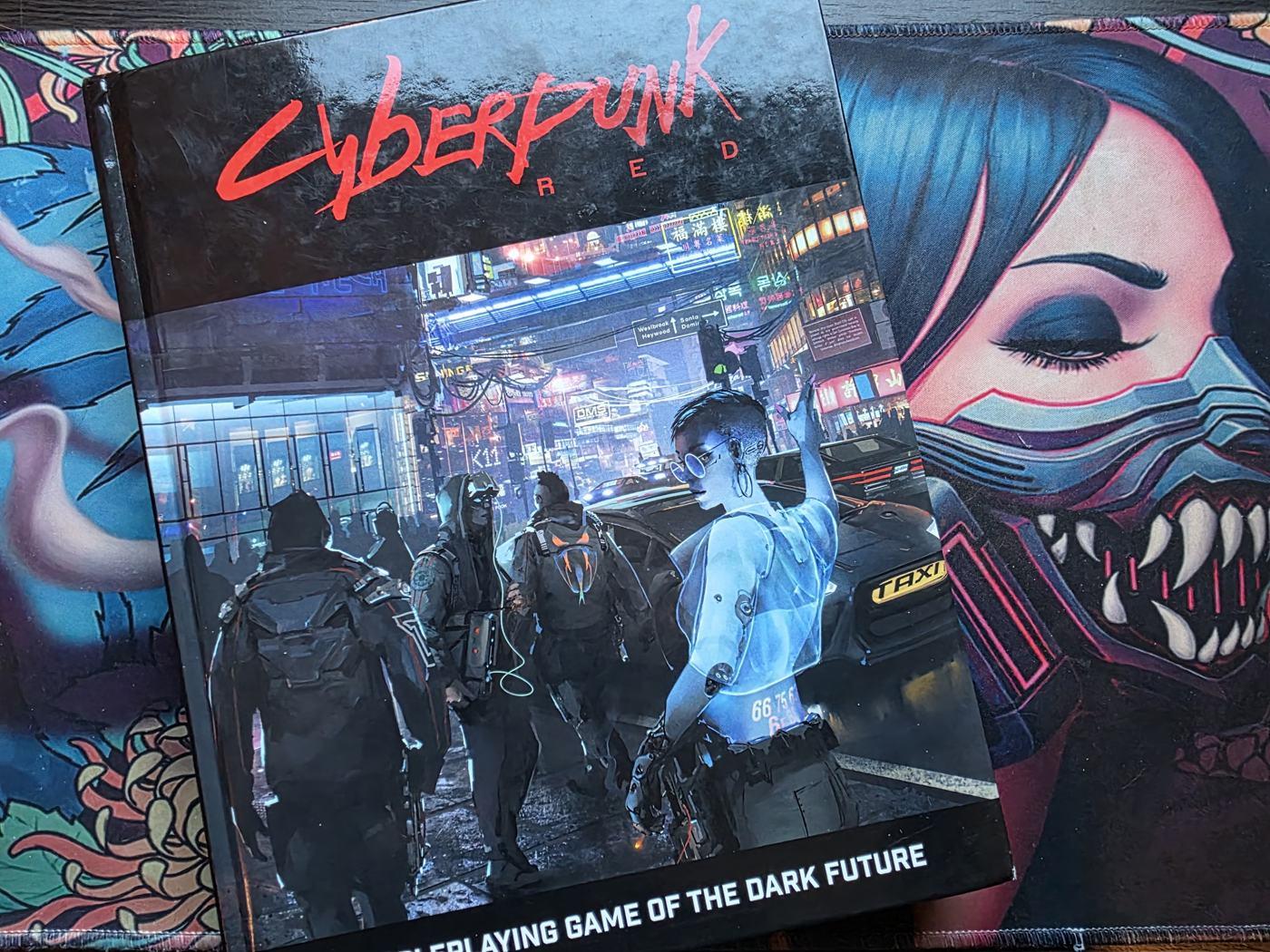
We both gave it a 1. Joe called it one of the worst-edited books he's read in his 20-something years of playing RPGs. He sees no cohesive vision, nobody bringing it together into a consistent flow, and a missed chance at art: there is very little of it. Blaine started at a 2, only because he'd just given Cyberpunk RED's core book a 1, then changed his mind on camera. "You are on Cyberpunk level."
A core rulebook should be the complete game. Joe pointed to the Stormlight core book: it has everything you need, and the starter set is an extra you buy because you want it. Here, the Starter Set is required for floors 1 and 2, and much of it is repeated in the Core.
What falls short (Blaine's notes)
Whole blocks of text come straight from the Starter Set. The Atlas is the same. So is the "Woo that special someone" quest, and its reward: "Prison time! Because you're creepy and weird and no one wants to see your collection of hand-painted fingernail clippings." That would be fine if the Core covered floors 1 and 2 and you didn't need the Starter Set. You do. So you're paying for the same pages twice.
The order doesn't make sense. The Atlas, which covers your HUD, inventory and clubs, is the first major chapter. Playing the Game comes next. Making a character starts about 100 pages in. Playing the Game has a list of the actions you can take on your turn with no descriptions anywhere near it, and it talks about popularity while the actual rules for it are much later.
Information is scattered and repeated. The HUD gets explained more than once. Prices are wherever the item is: mounts in the mount section, crafting tables in crafting, with no central list. Traps are vague and split between "Trap and environment scenes" and "Running traps" in a different chapter. Gods and Deities are two separate sections that could be one. The Healing section says to see the Healing Interrupt "above," and it's four pages back.
The examples of play run long: about 3 pages for social interaction, about 4 for exploration, and 4.5 for combat.
Some of the wording is just sloppy. Your rank damage die is "the die that is closest to your Skill Rank without going over," so with 7 ranks you roll a d6. Why would 7 go over 7? The Goblin Smoke Bomb fills "30 feet in each direction" and the Hobgoblin Smoke Curtain right below it covers "a 60ft radius." Pick one way to say it.
The PDF bookmarks don't match the book. The table of contents says Chapter 5, "Gamemastering the Dungeon," starts on page 234. The bookmark calls it "Running the Game" and points to page 249.
And what's actually here is mostly the novels again. Desperado Club and Club Vanquisher get descriptions and nothing else: no rules, no games, no shop lists. The settlements, NPCs and quests are the ones Carl and Donut ran into, quests included. There's advice for going off their path, on pages 260 and 425, but there are no equipment lists, no prices and no traps beyond Carl and Donut's iconic items.
What stands out (Blaine's notes)
The advice on running good social encounters is thorough and genuinely good.
My own taste (Blaine's notes)
I'd have split it into a rules book on its own and a floors book covering 1 through 5 together. Then nobody pays for the same pages twice.
SettingJoe12/20Blaine18/20
This is still the reason to care about Dungeon Crawler Carl, and it's where we split the most: Blaine 18, Joe 12.
Joe separates the setting of the novels from what this book does with it. "They were given this setting on a silver platter, and they dropped the ball." There's so much good material that it should have been its own setting book, the way the Stormlight game splits its core, setting and campaign books. Joe thinks a lot of the rules problems would have gone away with that split. The art that is here felt underwhelming and low resolution to him.
Blaine agrees the setting should have been stripped out of the core so it wasn't muddled with the rules. That's the 2 points he took off. The rest is why he still loves it.
The world is perfect for a tabletop game. Your group can bring in any geek culture it loves: video games, movies, other TTRPGs. The System AI lets you nudge players or hand them information in a way that fits the world, where other games make you find a roundabout way. The shows between and during floors pass information along, build hooks and push players to roleplay in character. And my favorite: when your players come up with a wild theory, the AI can make it true, because it heard them and thought it would be good TV.
ValueJoe2/20Blaine4/20
Blaine: "Honestly, no." Amazon lists it at $64.99, and you get a lot of pages for that. But a lot of them repeat the Starter Set you have to buy to play floors 1 and 2. It repeats itself inside the book, too, and nothing is well organized. On top of that, you're left to homebrew the gaps or buy a season pass for things that should be in the book.
Joe went lower, a 2. You shouldn't have to rely on people on Reddit and social media to fix a product for you, and a game should be usable when it hits the table. "As written, this book's useless to me."
Who it's for
Fans of the novels who'll run the game anyway and are ready to homebrew the shows, sponsors, gear and traps themselves. If you want a rulebook you can run from, this isn't it yet.
The verdict
Joe: 5. Blaine: 8. A 7 at the table, a Miss. Blaine scored it the same 8 he gave the Starter Set. From Blaine: The world is made for a tabletop game, and the engine has ideas I'd love to see in other games. But you pay for the same pages twice, and the GM is left to invent most of what makes Dungeon Crawler Carl special.
Affiliate link. It costs you nothing extra, and we may earn a small commission. Rather we not get a cut? Here's the plain link.