Cyberpunk · Fantasy · Shadowrun · Catalyst Game Labs · Black Book Editions · Rules-light
Shadowrun: Anarchy 2.0 Review
Risk Dice, Edge you earn by playing your flaws, heist-movie flashbacks, and a decker who hacks in the same scene as everyone else. Our review of the rules-light Shadowrun developed by Black Book Editions.
From Black Book Editions
- Format
- Hardcover, PDF
- Pages
- 322
- Price
- $49.99 hardcover, $35 PDF
- Type
- Rulebooks
- Best for
- Shadowrun fans who want the setting without the crunch, and tables that love a good heist
Read-through: we read this cover to cover but haven't run a session with it yet. Scores reflect the book, not how it plays.
Filed under rulebooks and starter sets. How we score
What works
- Risk Dice make every roll a real choice
- Playing your flaws earns you Edge
- Make a Plan swaps hours of planning for flashbacks
- The decker hacks in the same scene, not a side game
- Nuyen is your XP. No Karma
- Fighting Spirit ends fights before the grind
- Gritty art that feels like classic Shadowrun
What doesn't
- A lot is left to the GM, which is hard on new GMs
- No worked examples for magic or rigging
- The $35 PDF is pricey next to the $49.99 hardcover
This review contains affiliate links to DriveThruRPG. If you buy through them we earn a small commission at no extra cost to you. It never changes our rating. We say when something isn't worth your money. Black Book Editions sent us an early PDF to review, after Blaine backed the Kickstarter with his own money.
Affiliate link. It costs you nothing extra, and we may earn a small commission. Rather we not get a cut? Here's the plain link.
Yes. Shadowrun: Anarchy 2.0 keeps everything I loved about Shadowrun as a kid and throws out the bookkeeping. My calculator can finally retire. Risk Dice turn every roll into a choice, and Edge pays you for playing your character's flaws. Full disclosure: I backed the Kickstarter with my own money, and then Black Book Editions sent us an early PDF. It's the first preview copy we've ever reviewed, and it got the same treatment as everything else.
What we reviewed
The English PDF of the Shadowrun: Anarchy 2.0 core rulebook. Black Book Editions developed the game. Catalyst Game Labs is their partner and the Shadowrun IP holder. This is a read-through. We haven't run it yet. I read the rules cover to cover, including the decking chapter. I skimmed the rigging rules, the Seattle chapter and the campaign at the back, so I'm not scoring those in any detail.
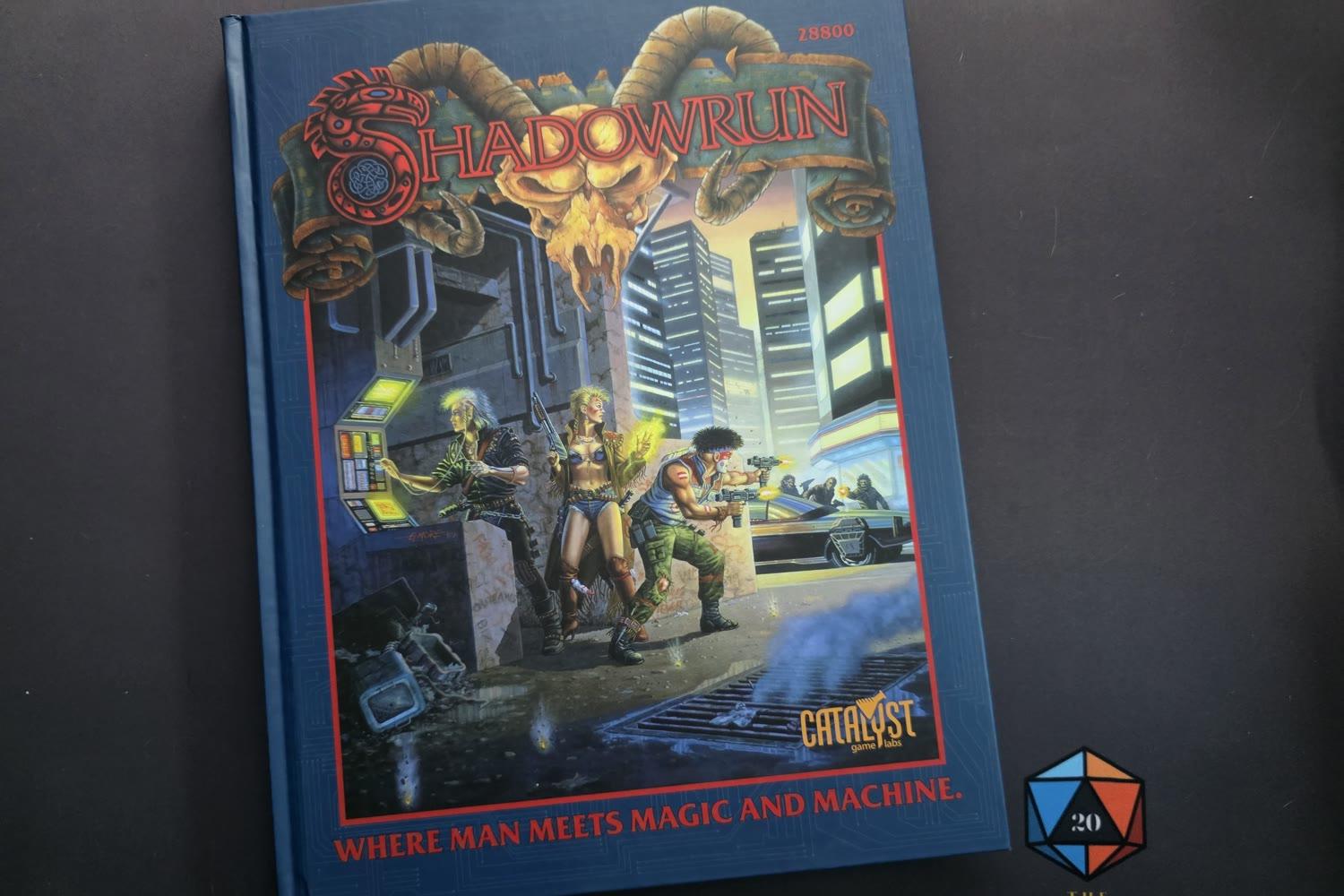
Some history, so you know where I'm coming from. I saw the cover of Shadowrun 2nd edition on the shelf at my local game store as a kid, and the mix of fantasy and cyberpunk hooked me on the spot. I was raised on Palladium and AD&D, so Shadowrun's crunch felt light at the time. I haven't played since 2nd edition. I ordered 6e after hearing it fixed the damage codes I never liked, but it's still sitting in our review pile. When I saw the Anarchy 2.0 Kickstarter, I assumed it was a 6e expansion. It turned out to be a rules-light version of the whole game, and it checked every box I had. I showed Joe, and I haven't seen him this excited about a game since the Cosmere RPG.
RulesJoe19/20Blaine19/20
You roll a pool of d6s, and every 5 or 6 is a hit. Extra hits become net hits, which make things go better for you, a bit like stunts in the Invincible RPG. Advantage and disadvantage don't make you roll twice. Advantage means 4s count as hits too, and disadvantage means only 6s count. You can only have one of each. Most games have some version of advantage under one name or another, and I like a lot of them, Lancer's included. The one I can't stand is D&D's roll two d20s and keep one. This version is simpler, and it moves your odds more than rolling twice does.
Risk Dice are my favorite mechanic in the book by a mile. Before you roll, you decide how many of your dice become Risk Dice. Hits on them count double, which is how you pull off the really hard stuff, but every 1 on a Risk Die can cause a glitch. The more you risk, the bigger the payoff and the bigger the chance it goes sideways. I haven't seen another system make every roll feel this tense. My inner gambler loves it. My runners' life expectancy does not. The book backs it up with a detailed list of what minor glitches, critical glitches and disasters look like for different actions. I wish Daggerheart had something like it for rolling with Fear.
Characters are built around Shadow Amps, a single catch-all for cyberware, adept powers, cyberdecks, drones, special gear and even contacts. An Amp's rating mostly gives you Risk Reduction, so specialists can push harder in their own lane without the same danger. You keep the classic Shadowrun roles, and you can build almost anything you can describe.
Each character also has four Dispositions, their motives, flaws and vices, and four Cues, lines they actually say at the table. Play one in a way that helps you, and you can spend Edge for advantage. Play one in a way that hurts you, and you gain Edge. Edge buys advantage, extra actions, even an interrupt in the middle of someone else's turn. Your flaws recharge the resource that lets you take big swings, so players lean into who their runners are instead of optimizing. Your decker's soykaf habit is now a resource. Drink up.
Make a Plan fixes the oldest problem in Shadowrun. You know the one: an hour of planning that falls apart on the first failed roll. Here, each player describes their legwork, like astral recon, bribing a contact, casing the building or pulling floor plans off the Matrix, and makes one roll. The hits go into a shared Planning Pool. During the run, the team spends from it to cut to a flashback and show how they already prepared for this exact problem. It plays like a heist movie, and the session never stalls. Nobody has to draw the air vents on graph paper ever again.
Decking was the part I worried about most. In 2nd edition, the decker jacked in and worked through a node map while everyone else went for snacks. Here, hacking uses the same tests as everything else, a Cracking roll with Risk Dice, and it happens turn by turn in the same scene. The decker opens a door while the street sam is shooting. It's still a real layer, with access levels, Patrol IC that scans you, and GOD closing in when you glitch. There's even a table of what outsider, user and admin access can do to an elevator, a camera or a maglock. But it never freezes the rest of the table.
The rest of the toolbox is just as smart:
- Wounds are simple: two light, then a serious, then incapacitated. The right cyberware or bioware can add one more light box and one more serious box, and that's it. There's no stun and lethal split, and it might be deadlier than Cyberpunk RED.
- Trauma Patches stabilize and Medkits heal. Fail a first aid or magical healing check on a wound and you can't try that way again.
- Only Prime NPCs roll full dice and get Edge. Everyone else uses average values, which keeps scenes moving.
- Fighting Spirit gives every NPC a morale level that says when they quit. A low one gives up at the first light wound or once a quarter of their side is down. Elite forces keep going until three quarters of their side is down. So you don't grind every guard down to zero. The book rates rent-a-cops as low. They don't get paid enough to die for a megacorp, and now the rules agree.
- Nuyen is your experience. There's no Karma. You get paid, and that money is how you get better, which is how it should work in a world run on money.
- Lifestyle trades payout for social perks. Live as a squatter and you keep more nuyen, but nobody wants to talk to you. You smell like the dumpster behind a Stuffer Shack.
- A Random Event Generator rolls a twist that isn't just another fight. I'd steal it for other games.
A few things don't land for me. Perception is the skill for remembering things, and I can't think of a better fix, but it's odd. Lockpicking and palming are specializations of Stealth. I get why, since stealth is what runners use most. I'd still rather see a main skill like Larceny, with lockpicking and palming under it and stealth as one of its specializations. And a lot is left to the GM. Grappling has no set outcome, and the GM decides what incapacitated means, so a downed runner might be conscious or bleeding out. That's my kind of game, but a new GM who wants clear rules will have to make more calls than usual.
Two more things I liked. The book talks about what happens when you kill on a run. Drop the security guard who was about to retire and you're on the news, and a clean job becomes a manhunt. The drug rules are clever too. Alcohol lets you ignore wound penalties, but every action for the scene has to be High or Extreme Risk. That's the best way I've seen a game make drunk mean something.
LayoutJoe17/20Blaine19/20
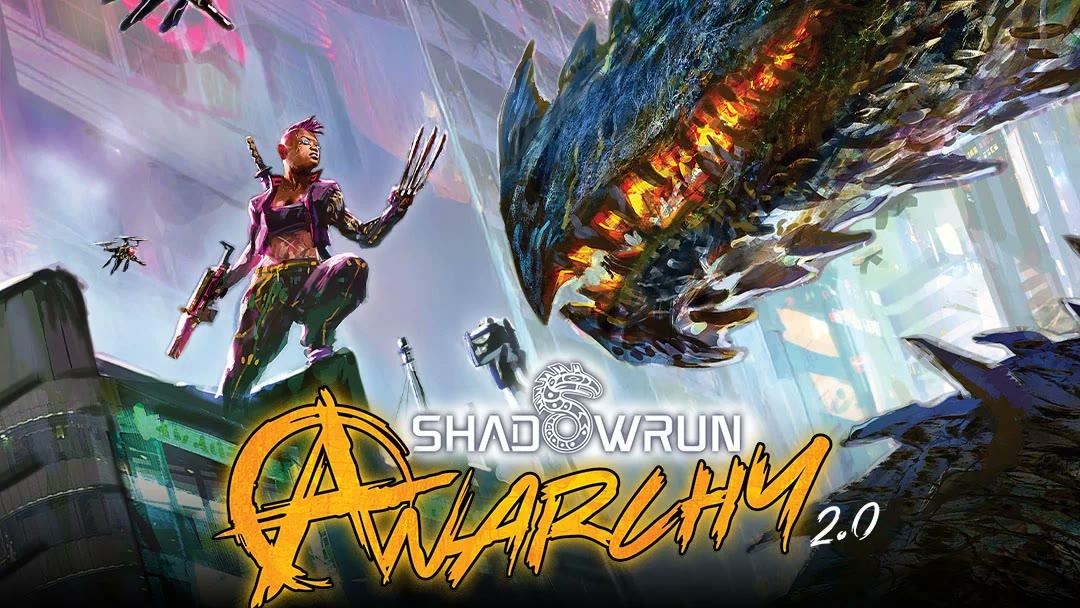
The art is Shadowrun. It has the same feel as the books I grew up with, made modern, with a gritty, scratchy style that runs through the whole book.
The book puts the rules before character creation. That usually bugs me, and I've dinged other games for it. Here it works, because you need to understand Shadow Amps, Edge and Risk Dice before you can build a runner.
Two small dings. The cyberlimb entries in the gear list are inconsistent. Cyberlegs come as a basic pair and an upgraded pair, but cyberarms skip the basic pair and mix single entries with pairs, all at the same Essence cost. It left me unsure whether I was supposed to buy arms one at a time. My street sam has questions. And I wanted more examples of play. Decking gets a great one, a three-page run from the decker's side, with every roll shown. Magic and rigging don't get any.
SettingJoe20/20Blaine20/20
The book opens with a big lore dump, just like 2nd edition did. I pulled out my anniversary edition to check. I've knocked Cyberpunk RED for front-loading lore and then dripping more through the book, but Shadowrun parks most of it in one place.
The Sixth World has moved to 2084. Second edition was set in the early 2050s. The foundation is the same: magic came back, and people mutated into elves, dwarves, orks and trolls. What's new is the decades of history piled on top.
The setting leans harder into the racism metahumans face than I remember from 2nd edition, and I'm glad they kept it. A lot of games have sanded that kind of edge off. In Shadowrun, metahumans were people first. They mutated. They weren't born an evil race, and the prejudice they face gives players something real to fight against. The setting is stronger for it.
Chapters like Mundane World and Virtual World explain what runs are like and what to expect, with gear lists along the way. I wish Cyberpunk RED had chapters like these. There's also a long section on Seattle, the Emerald City, and a full campaign to run a group through.
One heads up. The advice and examples lean toward professional corporate heists. If your table wants street-level jobs or more combat, the rules handle it fine, but you'll design more of it yourself.
ValueJoe20/20Blaine19/20
The hardcover runs $49.99, and I've seen it as low as $39.99. That's about 16 cents a page for a complete game, right in line with Lancer and Cyberpunk RED, and less than a lot of core books cost now. The PDF is $35 everywhere I've looked, which is 70% of the hardcover price.
I walked in with a 17 because of that PDF price. Joe talked me up to a 19 on camera, and he's right. The price isn't the whole story. You get the rules, the setting, Seattle and a starter campaign in one book, and there's no weak spot that makes you regret paying for it. Joe gave Value a 20 and said he'd happily pay $70 for it. The PDF is still expensive for what it is, so if you want a copy at the table, buy the hardcover.
Who it's for
Shadowrun fans who love the setting but not the bookkeeping. Tables that love a heist and don't mind when it goes sideways. GMs who are happy to make a ruling and move on. If you need the rules to answer every question, or you want a tactical combat game, look at full Shadowrun or Lancer instead.
The verdict
A 19, a Hit, and Joe and I both landed there. Nearly every rule in this book pushes you to take the risk and play your character, and none of them slow the game down. If you've ever wanted to run Shadowrun but bounced off the crunch, this is the one. Leave the calculator at home.
Affiliate link. It costs you nothing extra, and we may earn a small commission. Rather we not get a cut? Here's the plain link.