Cyberpunk · Fantasy · Shadowrun · Catalyst · Cyberpunk
Shadowrun First Edition 35th Anniversary Review
The 1989 Shadowrun rulebook, reprinted page for page with the rough rules left in. Blaine's read-through of Catalyst's Shadowrun First Edition 35th Anniversary reprint, bought on nostalgia.
From Catalyst Game Labs
- Format
- Hardcover
- Pages
- 208
- Price
- $49.99 list
- Type
- Rulebooks
- Best for
- Old runners and collectors who remember the original
Joe no score/20Fell down a well.
Read-through: we read this cover to cover but haven't run a session with it yet. Scores reflect the book, not how it plays.
Filed under rulebooks and starter sets. How we score
What works
- The 1989 Sixth World, page for page
- Extra successes and exploding sixes, ahead of most games of the day
- Karma works like hero points, with rerolls when it counts
What doesn't
- Several dice pools to manage
- The Matrix is a separate game for the decker
- Magic and damage codes are a pain
- Karma as advancement makes encounters hard to balance
- $50 for a book you'll read more than play
This review contains affiliate links to Amazon. If you buy through them we earn a small commission at no extra cost to you. It never changes our rating. We say when something isn't worth your money. As an Amazon Associate we earn from qualifying purchases.
Affiliate link. It costs you nothing extra, and we may earn a small commission. Rather we not get a cut? Here's the plain link.
I bought this one on nostalgia alone. As a kid I'd see Shadowrun on the shelf at the game store and wonder what it was. It was my first taste of cyberpunk, and flipping through this reprint takes me right back.
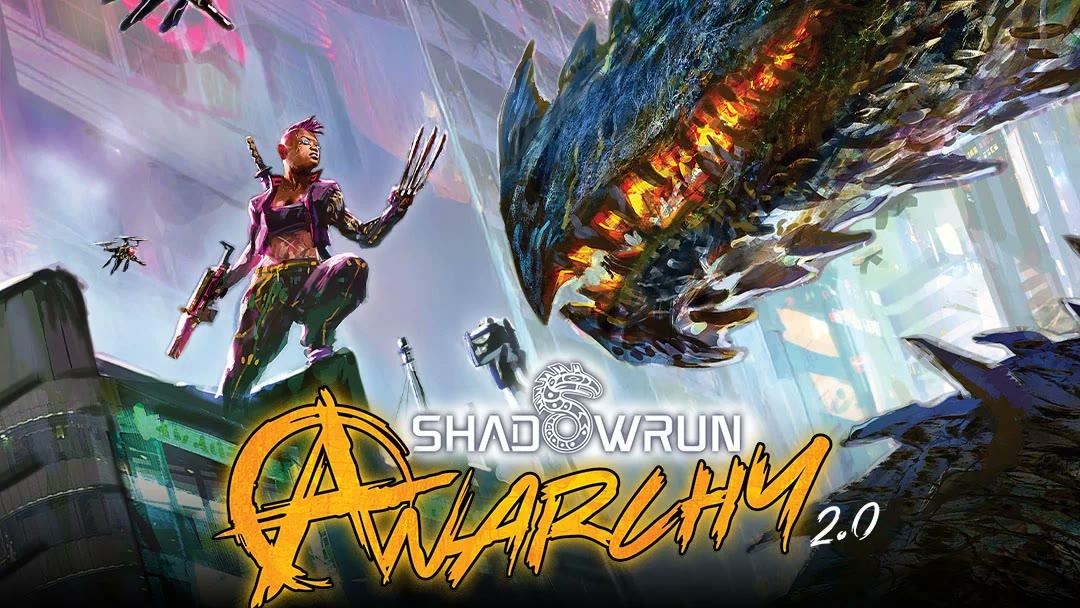
So here's the short version. Buy it for the memories and the Sixth World. If you want to play Shadowrun today, play Shadowrun: Anarchy 2.0.
What I reviewed
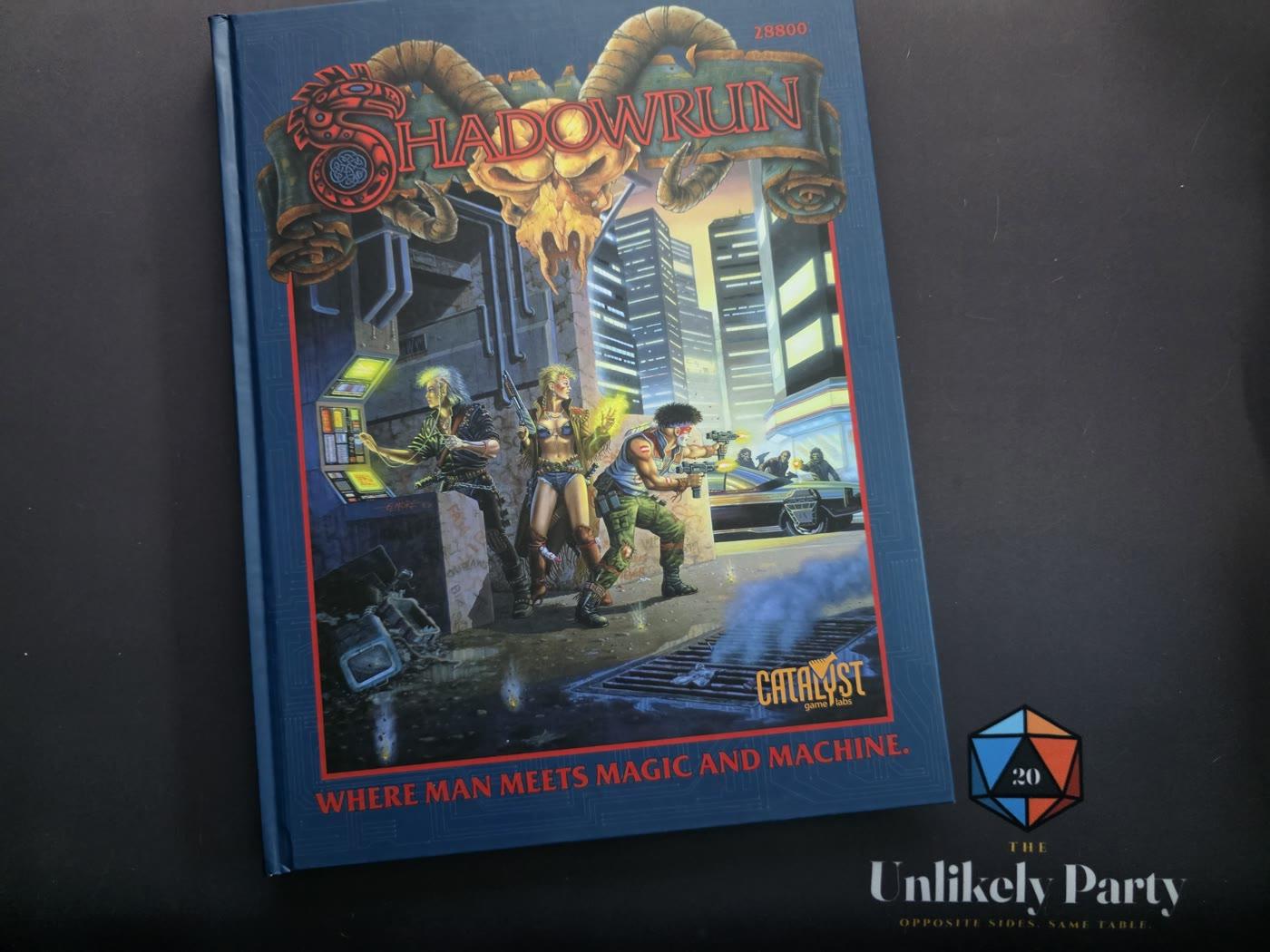
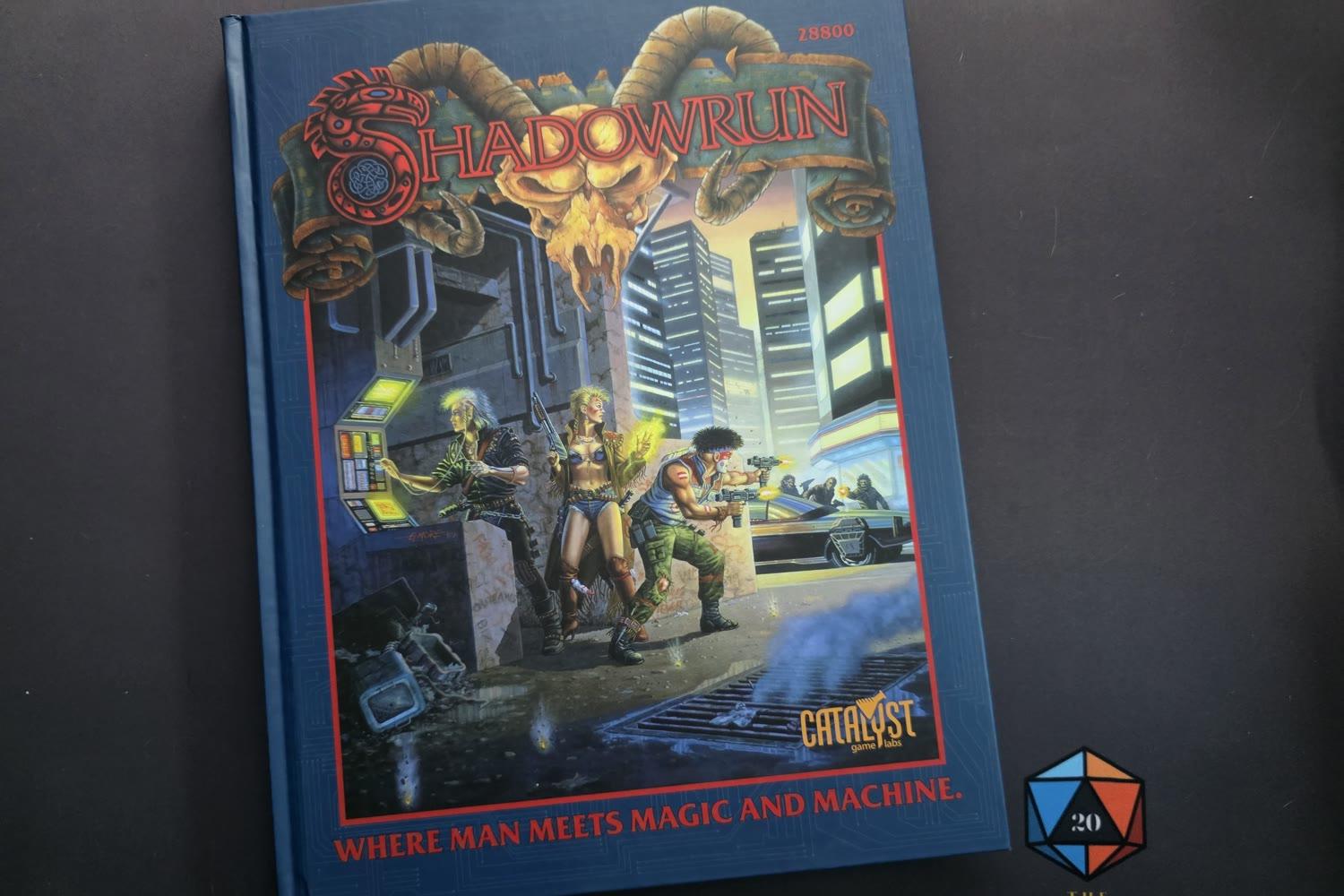
Catalyst's 35th Anniversary reprint of the 1989 First Edition rulebook, in hardcover. I bought it on Amazon for $49.99. It has the same layout and page numbers as the original, with the art cleaned up and the original errors left in on purpose. It's a read-through. I started on 2nd Edition in the '90s, so this is the one just before mine.
Rules8/20
The rules are chunky and rough next to anything made today. We didn't care when we were kids. Every system back then was rough. They hadn't matured yet, much like us as teens.
You roll a pool of d6s against a target number, and every die that hits it is a success. Extra successes mean extra damage or a better result, the same idea behind the net hits in Anarchy 2.0. Sixes explode: roll them again and add. Most of what we played back then didn't have either one.
You also had extra dice you could add to your rolls. The catch is that First Edition splits them into separate pools for dodging, melee defense, magic, hacking and vehicles, and that's a lot to manage. 2nd Edition, the one I played, folded dodging and defense into a single Combat Pool.
Then there's Karma, which does two jobs. In play, it works like hero points: spend it to reroll failures and more. That was player agency AD&D didn't give you, and it's something I need in a game today. It's also how you advance. Instead of levels, you spend Karma to raise your skills and attributes, and I hated that even back then. I still do. In 1st Edition it's all one pool, so every point you spend on luck is one you don't spend on your character. 2nd Edition split off a separate Karma Pool for rerolls.
My problem with Karma as advancement is the GM side. Without levels, it's hard to tell how strong the party is. You have to keep track of how much everyone has improved. When a new player joins, how do you make sure they're roughly as strong as everyone else? How do you design enemies? It's a rough way to improve characters, and it makes balancing encounters guesswork. It's the same reason I hate Improvement Points in Cyberpunk RED. Give me levels, or figure something else out.
Damage comes in codes like M2, a wound level with its own staging number, and even tracking health is a pain. Magic is worse. Flipping through it reminds me how overly complicated it was.
Then there's the Matrix. When the decker jacked in, it was a full, separate dungeon crawl just for them, and the rest of the table checked out. Nowadays they'd be on their phones. Back then they'd read or chat. I'm so glad the newer editions fixed this.
Layout18/20
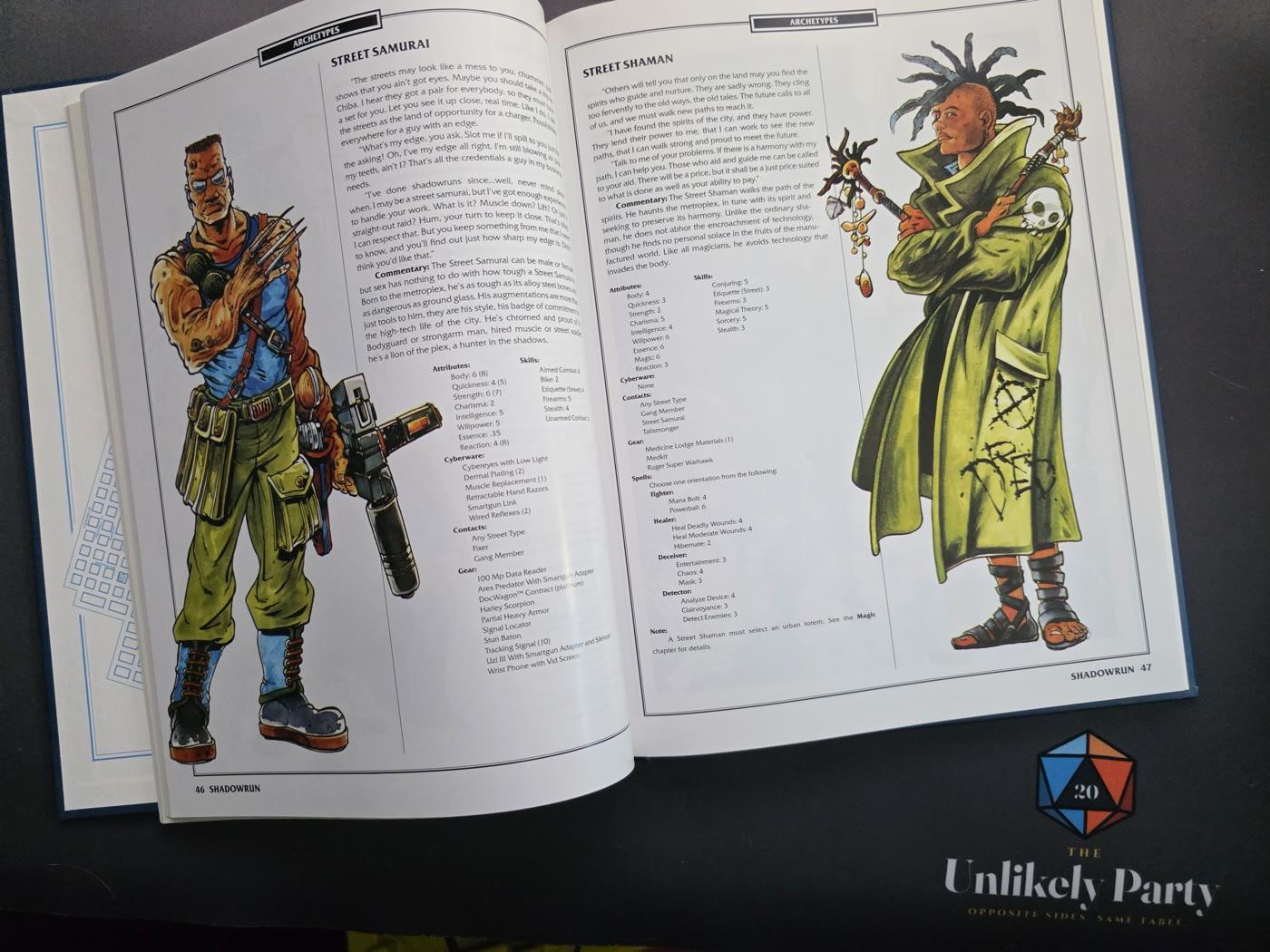
Everything is the same as the 1989 book, and it holds up. Anarchy 2.0 follows almost the exact same layout: the lore up front, then the game concepts, then character building, and so on. 35 years later, Catalyst is still building Shadowrun books the way this one was built.
The art is rough by today's standards, but it was great back then, and it's the art I remember.
Setting17/20
The Sixth World is why Shadowrun caught my eye as a kid. Magic is back, elves and orks walk the streets, and the megacorps run everything. It was my first taste of cyberpunk, and it still makes me want to play.
Back then this setting would have been a 20. Today, after Anarchy 2.0, it shows its age. The world has kept moving for 35 years. The Matrix, for one, is wireless now.
I think it was also the first game I ran, with the 2nd Edition book. I had the book, loved the world, and just did it. We cleared zombies out of the sewers, and I was terrible. I wrote about that game in Just Run the Game.
Value14/20
At $49.99, this is a lot for a book you'll read more than play. If you're buying it for nostalgia like I did, it's a 20. If you want to play Shadowrun, the same money gets you Anarchy 2.0, a modern game you'll actually run.
Who it's for
Old runners who remember the original on the store shelf, and collectors. If you're new to Shadowrun, start with Anarchy 2.0 instead.
The verdict
A Graze. The Sixth World was one of the best settings of its day, and the rules had ideas most games didn't, but they're as rough as they were in 1989. Buy it for the memories, not to play.
Affiliate link. It costs you nothing extra, and we may earn a small commission. Rather we not get a cut? Here's the plain link.