Just Run the Game
By Blaine · · 3 min read
Greetings all,
You’ve been sitting on a rulebook for months. Maybe years. Telling yourself you need to learn more, prep more, be better before you sit behind the screen.
You don’t. Run the game.
We Forgot How to Play
When I was a kid, we didn’t agonize over being “ready.” Someone got a rulebook, flipped through it, said “I’ll run something,” and we played. We didn’t know the rules. We made stuff up. We had a blast.
I think it was Shadowrun. I had the book, loved the world, and just... did it. No prep. No warm-up. We cleared zombies out of sewers and I was terrible. My descriptions were awful. I had no idea what I was doing. Encounter balance? Never heard of it. We just played, and we had fun.
Adulthood robs us of that. School becomes work. Play becomes “unproductive.” Make-believe becomes childish. And then one day you’re an adult who hasn’t used your imagination in years, and someone hands you a rulebook and says “pretend to be an elf.” And suddenly you’re terrified.
Not because it’s hard. Because you forgot how to play, how to let loose and make believe with your friends like you did as a kid with action figures on the carpet.
The Fear That Stops You
Adults overthink everything:
What if I don’t know a rule? What if I’m not entertaining? What if I mess up? What if they think I’m weird for pretending to be someone else?
Kids don’t have this. We didn’t worry about being “good enough.” We just wanted to fight dragons.
Here’s what nobody tells you: That’s still how it works.
You’re allowed to not know the rules. You’re allowed to make a ruling on the fly. Your players aren’t there to judge you. They’re there to play a game with their friend.
What This Actually Is
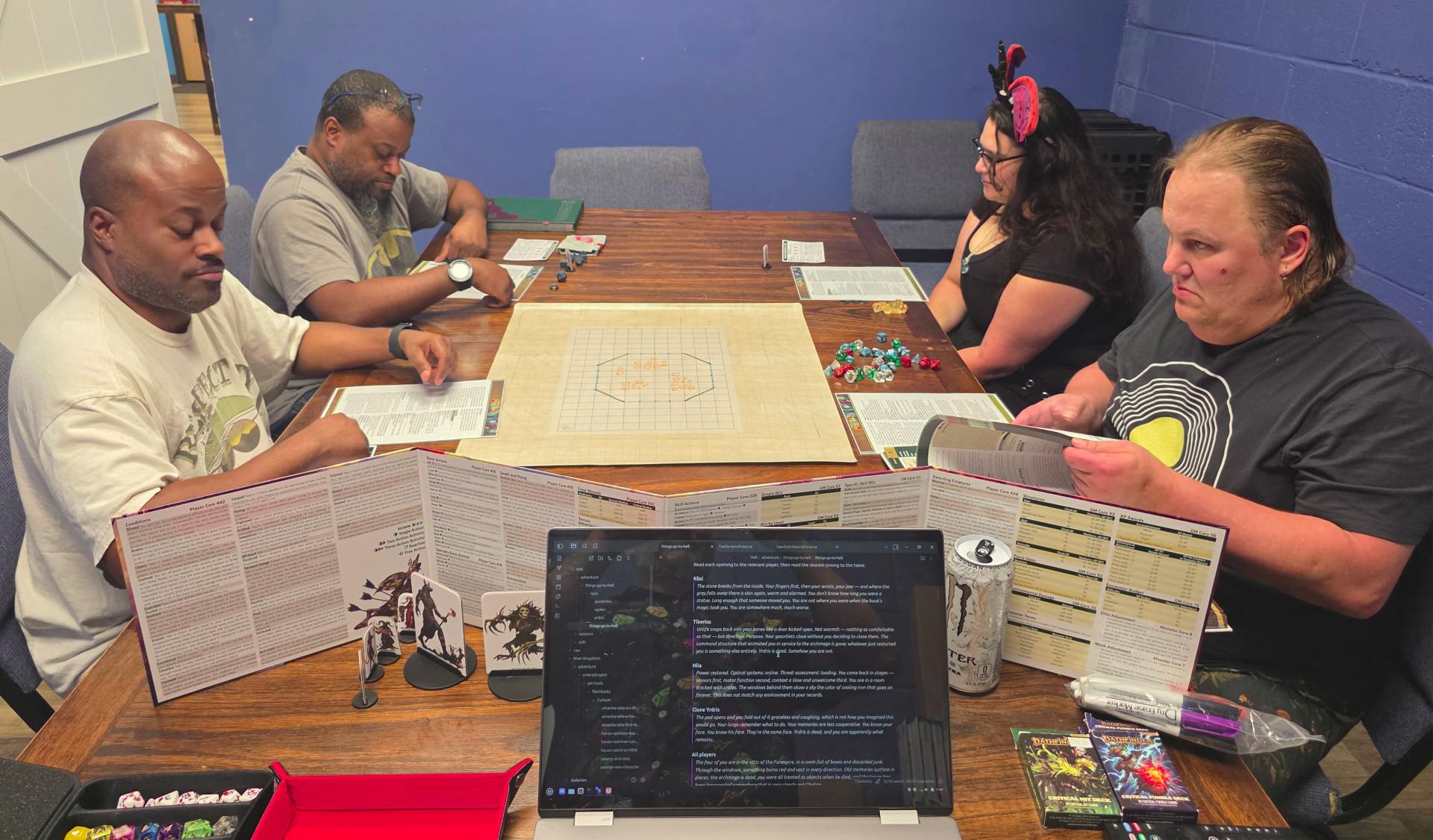
TTRPGs are sitting with friends and playing make-believe. All the rules, dice, and systems are just scaffolding: a structure to hang stories on.
You’re not trying to be Matt Mercer. He’s been doing this for decades. He’s a professional voice actor running a show for millions. That’s not what you’re doing. And I promise you, Matt wasn’t great his first game either. Or his second.
You’re gathering friends to spend time together, tell a story, and make memories. If you can do that, you can run a game.
You Don’t Need Much
Not rules mastery. Know the basics, fake the rest. “Let me make a call now, we’ll look it up later” is a complete sentence.
Not the perfect adventure. Grab a starter set or a free one-shot. It doesn’t need to be a masterpiece. It needs to happen.
Not fancy tools. No maps, minis, screens, or ambient sound required. Pencils, paper, dice, imagination. Everything else is optional.
Not experience. You get that by running games, not reading about them.
Pick a World, Grab Friends
“Which system should I run?” The one that excites you.
D&D has the biggest name and most players. But there are hundreds of systems: fantasy, sci-fi, horror, cyberpunk. Some rules-heavy, some rules-light. If you want a recommendation: Daggerheart (PDF / Physical). The whole rules system fits on a single page. The rest of the book is setting and story, because that’s what the game is actually about. You’re not learning a system, you’re just playing.
Pick the world you’re drawn to. Find a system in that space. Run it. You can switch later.
Your First Game Will Be Rough
You’ll forget rules. You’ll blank on an NPC’s name. The pacing will be off.
None of this matters.
What matters is you’ll finish that session thinking, “I could do better next time.” Then you’ll run another game. And another. And slowly, you’ll get good.
Every great GM started exactly where you are. The difference is they stopped waiting.
Pull up a chair. Come play make-believe with me.
Already run your first game? Tell me how it went. Still on the fence? Tell me what’s stopping you.
More GM tips
- Stop Describing Rooms
GM Tip
Stop Describing Rooms
What your read-aloud should tell players instead
July 7, 2026 · 6 min read
GM Tip
The Three Asks
The questions that make your world theirs
June 29, 2026 · 6 min read
GM Tip
Session Zero Ends Before the Tavern
The session where nobody meets anybody
June 18, 2026 · 7 min read