You're Not Playing Against Your Players
My lessons from Phoenix Fan Fusion 2026
By Blaine · · 6 min read
Greetings all,
I almost didn’t make it to the table.
Day one of Phoenix Fan Fusion, I was sitting in my car somewhere in downtown Phoenix, $21 lighter from a parking reservation I’d booked for the wrong time, Google Maps routing me in circles, phone blowing up with messages from the company that hired me. I’d committed to running Daggerheart demos all weekend and I was ten minutes away from sending a very apologetic text and going home.
I pulled over. Fixed the parking (for another $21). Found the garage. Made it to the convention.
I’m glad I stayed. Not because the weekend went smoothly (it didn’t), but because of what it reminded me about why I do this.
It’s my job to craft a memorable story with my players. We are a team. Not rivals.
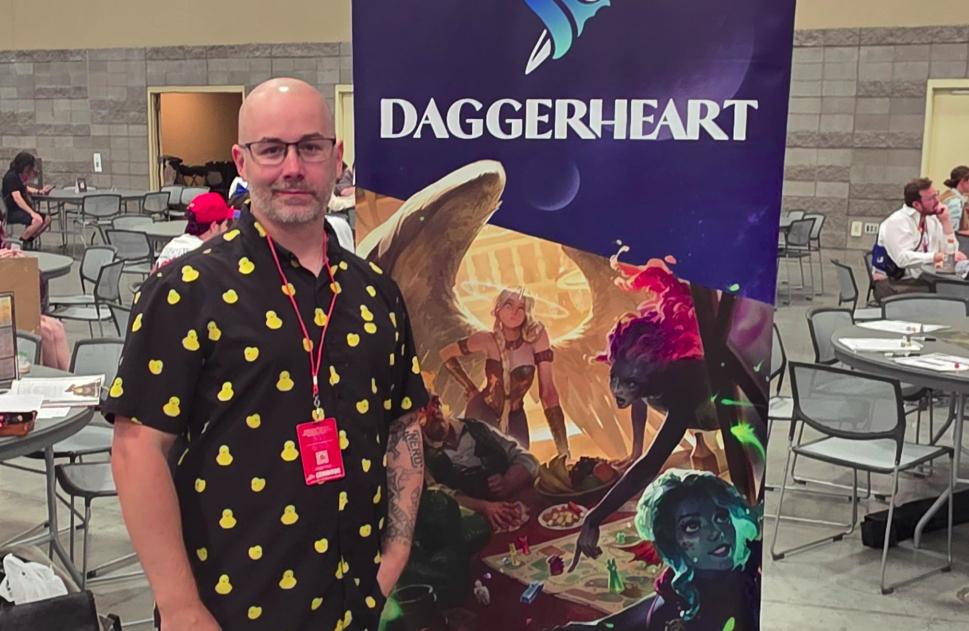
What the Adversarial GM Looks Like
You know the type. Maybe you’ve played with one. Maybe at some point you’ve been one.
The adversarial GM treats every session like a contest. The monsters are proxies for the GM. Every encounter is a test. Player deaths feel like victories. When a player finds a creative solution that wasn’t in the plan, there’s a brief flash of annoyance before the GM patches the hole.
It’s not always malicious. Sometimes it’s just how people learn the role, especially from old-school traditions where the GM and players really were in opposition. But it poisons the table slowly. Players stop trying things. They play conservatively because boldness gets punished. The story gets smaller.
Same Adventure, Different Heroes
At Fan Fusion I ran the first two acts of the Daggerheart quickstart adventure (same material, same encounters, same story beats) over three days.
The adventure has a scene with a strixwolf mother and her cubs. She’s not a difficult fight. She’s a moral decision.
One player put an arrow through her eye. Crit hit. Massive damage. Clean kill. (Looking at you, Aubrey.)
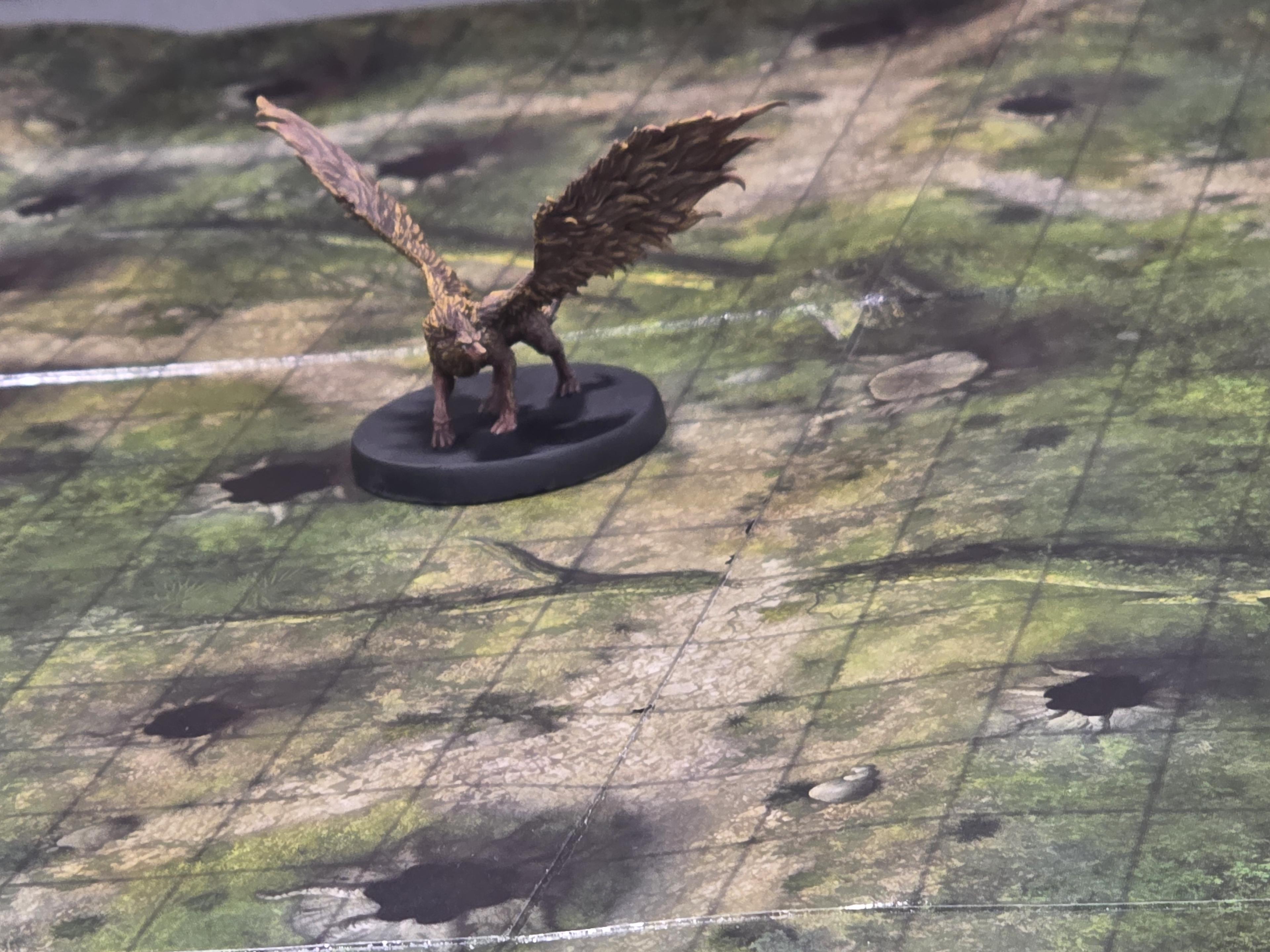
Another group tried to feed her. Critical hit on the attempt. She backed down. They spent the rest of the session with a wolf following them around. And when the ambush hit, they used her. Daggerheart has a Tag Team action that lets players combine efforts into a single move. They called it. The wolf dropped the fighter right into the enemy line so he didn’t need to make an agility check to close the distance, then snatched one of the ambushers off the ground and dropped it in front of the Giant, who cleaved the falling enemy in half on the way down.
I said yes to all of it.
Another table tried to scare her off. Worked. She retreated into the woods and they moved on.
Same creature. Same stats. Same situation. A dozen different stories, and I only highlighted three of them.
The second act has a bandit fight. Some tables went straight for blood. Others tried to scare the bandits off. One player rolled so well they stole the bandit leader’s weapon right out of his hands.
I love watching how different people approach the strixwolf. Kill her, befriend her, drive her off. It might be a window into the soul of the people sitting at your table.
My job in every one of those moments was the same: honor what the players chose. Not steer them toward the right answer. Not punish them for going off-script. Roll with it, build on it, make their choice feel real.
Players will always surprise you. Your job isn’t to stop them. It’s to say yes, and.
The People at the Table
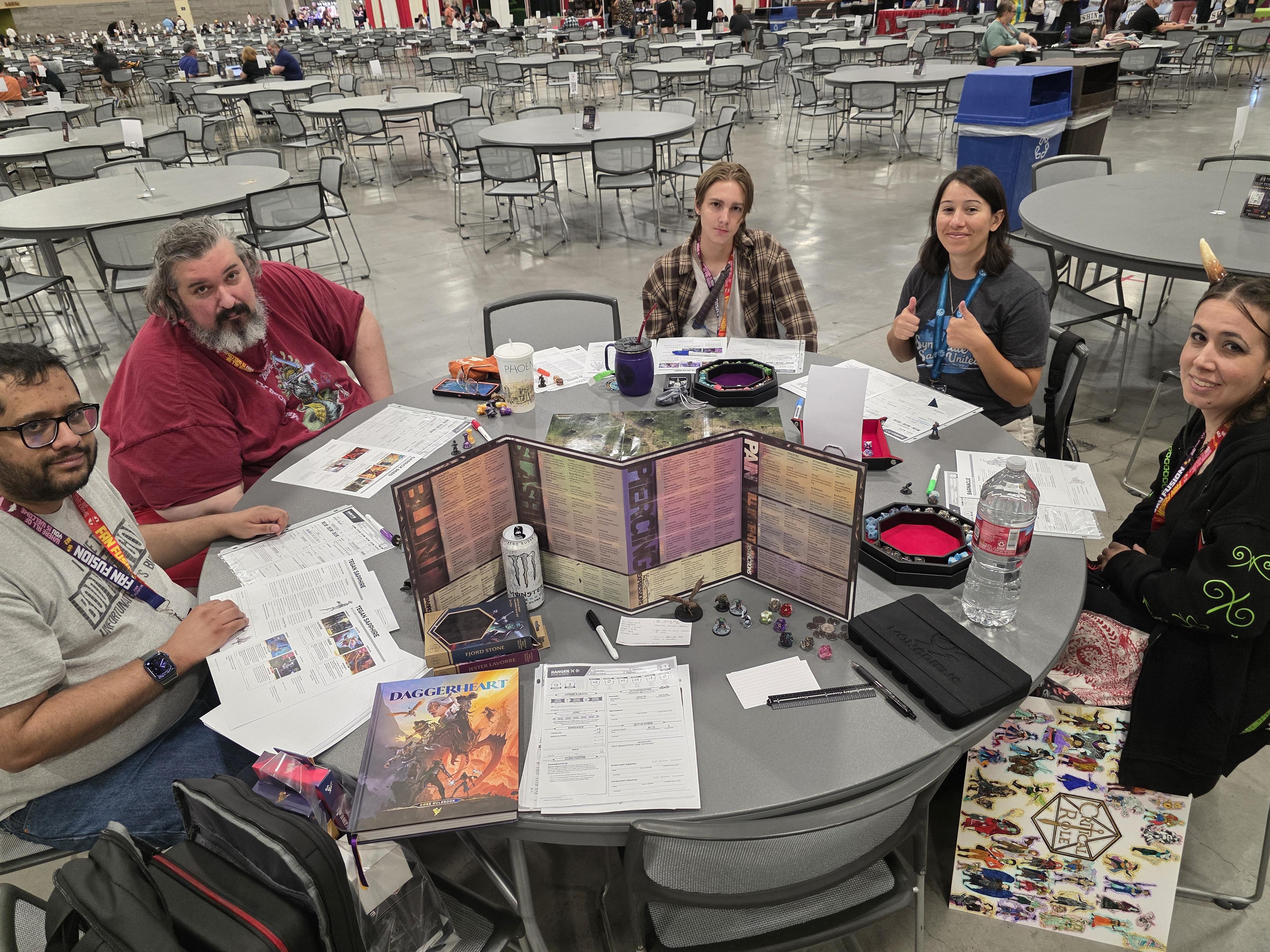
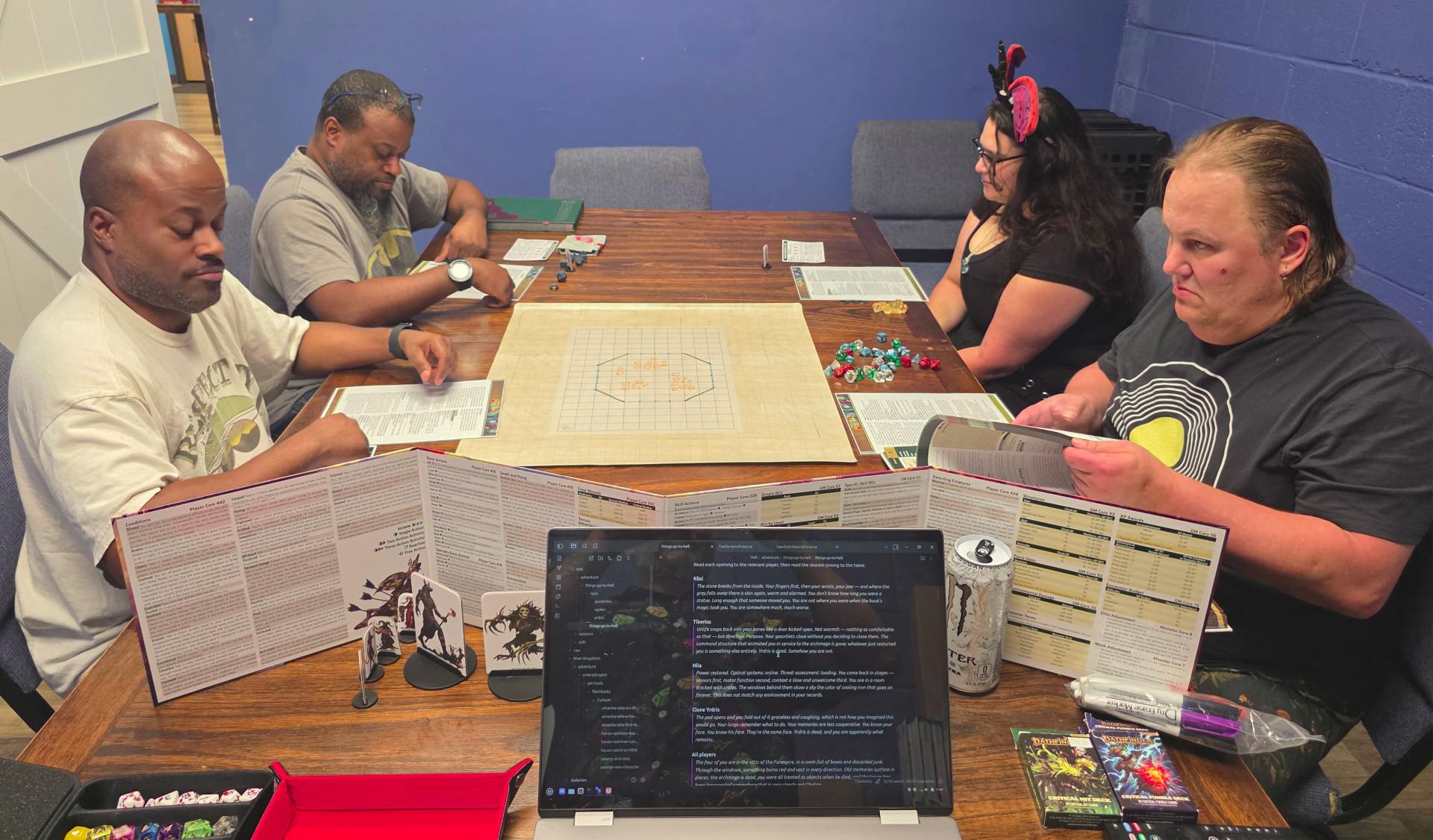
I lost count of how many games I ran. Most were drop-ins: people who wandered past, saw dice, and sat down. Groups of friends, mixed strangers, experienced players, and absolute newcomers who had never touched a TTRPG before.
I was many people’s first game this weekend. I always love that. They get to play with an experienced GM right out of the gate, which gives them a real shot at coming back.
One girl on day two had never played anything. She started quiet, watching her friends for cues, unsure of herself. By the end she was grinning, describing her character’s fiery blast in detail nobody asked for.
There was Anthony, who waited a long time for other players to fill the table. Shy. Stuttered his descriptions at first. By the last scene (my throat raw, running on fumes at the end of day two), he wasn’t stuttering anymore. His tablemate Chris rolled a crit on the final enemy and the table erupted.
On the last day, a family sat down after my slot was technically over. Mom had bought the Daggerheart corebook and wanted to learn how to run it. She played through the adventure to understand it from the ground up. At the end she was already planning how she’d run it for her family when they got home.
None of those moments happen if I’m playing against them. They happen because I’m playing with them. My win condition is their win condition: a good story, a memorable moment, a reason to come back.
I Got Something Wrong This Weekend Too
On day two I was sitting in as a player at another GM’s table, Aubrey’s, and a player rolled with fear. She didn’t take the spotlight.
I questioned it. At the table. In front of everyone. She pushed back. I pushed back harder.
The second I doubled down, I felt it: that sinking recognition that I’d stepped in it.
We looked it up. Turns out taking the spotlight on a fear roll is optional, not mandatory. I was wrong on the rules. And I was wrong to call her out publicly regardless.
I’m putting this in because it matters. The GM-as-teammate principle applies to the other GMs at your table too. Correcting someone mid-session in front of players is adversarial, even when you think you’re right. Take it offline. Talk after.
I know better. I did it anyway. I own it.
Aubrey, I already reached out, but if you’re reading this, take it as a public apology too. You didn’t deserve that.
The universe has a sense of humor. Later in the weekend I was GMing and a player told another player they needed to mark a stress after rolling with fear. That’s not how it works. A GM can choose stress as an outcome, but it’s not automatic. I corrected it quietly, after the scene. Lesson received.
What This Means at Your Home Table
You don’t need to run a dozen con demos to apply this. Here’s what it actually looks like:
Design encounters around decisions, not difficulty. The strixwolf isn’t there to test the players’ stats. She’s a situation with multiple valid approaches, and your job is to honor whichever one they choose.
When a player does something unexpected, lead with “yes, and” not “no, but.” They fed the wolf and rolled a crit. The wolf is their friend now. They were rewarded for the idea and the roll. Build on it.
Your win condition is the same as theirs. A session where the players felt like heroes is a good session. A session where the GM “wins” is a ruined table.
The quiet player who opens up is worth more than a perfectly-run encounter. Anthony stuttered through his first description. By the end he wasn’t. That doesn’t happen at an adversarial table. It happens because the GM is on his side
I ran over my schedule on the last day because I didn’t want to leave a small group without the experience. Stayed. Ran the game. Mom went home excited to run Daggerheart for her family.
That’s the job.
I started that weekend in a parking garage, twenty seconds from going home. I ended it running a filmed session for Elliot Gruenberg (vocalist of blessthefall and host of Board Games and Breakdowns on YouTube) while Critical Role sent personal thanks up to our team.
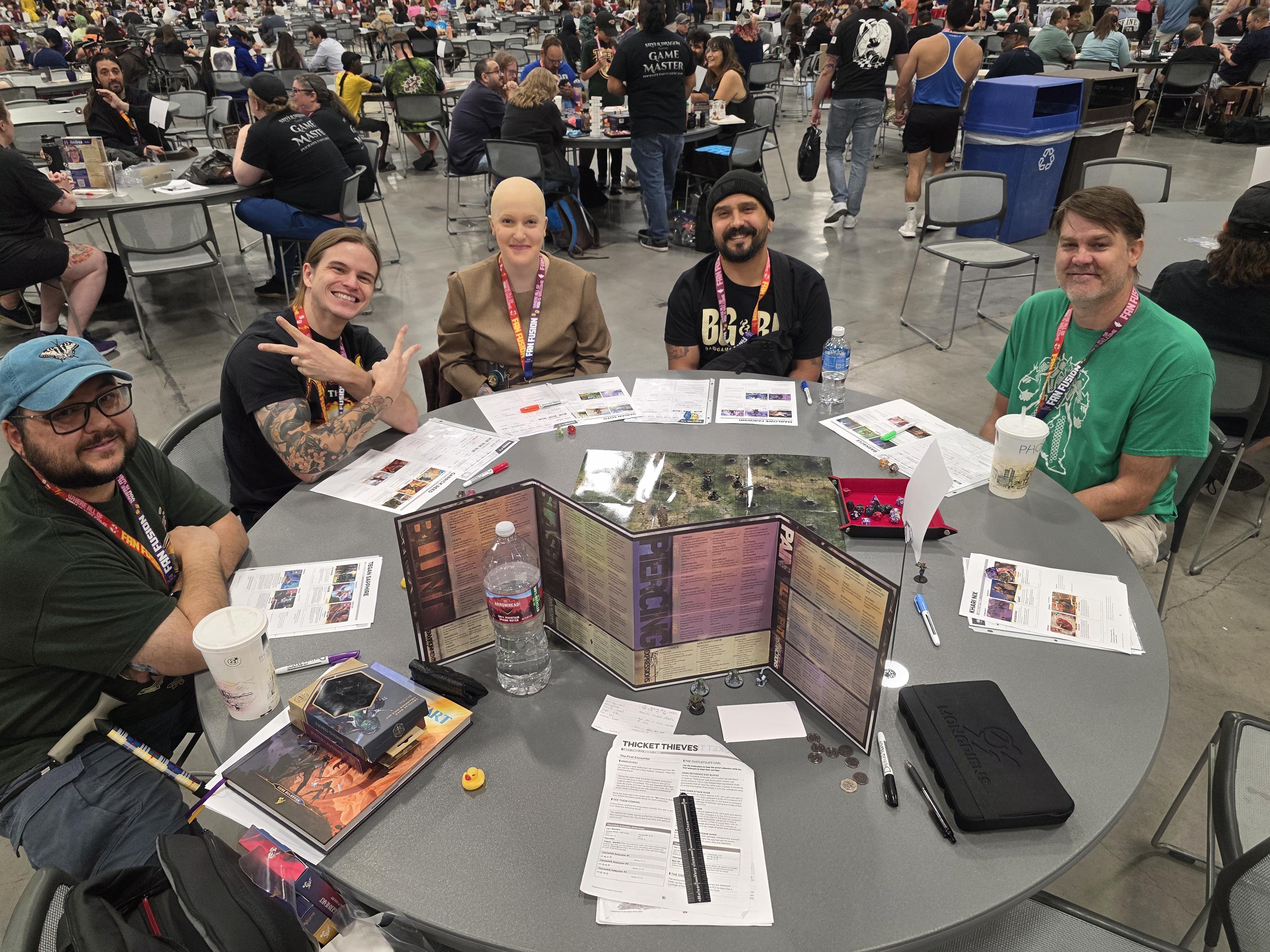
The only reason any of that happened is because I showed up for the players at every table.
Now I can call myself a professional GM.
See you at the table.
Want to try Daggerheart yourself? Grab the PDF corebook on DriveThruRPG or the physical core set on Amazon.
More GM tips
- Stop Describing Rooms
GM Tip
Stop Describing Rooms
What your read-aloud should tell players instead
July 7, 2026 · 6 min read
GM Tip
The Three Asks
The questions that make your world theirs
June 29, 2026 · 6 min read
GM Tip
Session Zero Ends Before the Tavern
The session where nobody meets anybody
June 18, 2026 · 7 min read