Prepping a Published Adventure
My system for running published adventures
By Blaine · · 8 min read
Greetings all,
We’ve been talking about getting you behind the screen. If you’re still on the fence, go read Just Run the Game first and come back when you’re ready.
Still here? Good. Let’s talk about where to start.
Grab a published adventure. A one-shot to test the water, a full module or campaign if you’re ready to commit. The hardest part of GMing is inventing content from nothing. Published adventures hand you the content and let you focus on what actually matters: running the thing in front of real people.
This post covers how to prep one. If you’re building your own world from scratch, that post is coming next. Stick around anyway. A lot of what’s here applies to your table too.
Last week I spent close to three hours prepping a three-hour session.
Obsidian template filled in. Monster Core hunted for PF2e stat block swaps. Two NPCs built out for the town. Beats planned and plotted. Three hours.
Then a player walked into town, spotted a wanted sign on a post, and threw the whole plan out the window.
The session survived. I’ll tell you how at the end of this post. The short version: the prep is what saved it.
Most GM prep advice is written for homebrewers. People building worlds from blank pages. They tell you to prep situations not plots. Good advice. For someone inventing the adventure. You’re not inventing it. It’s already there in the book. Your job is different.
Running a published adventure means learning existing content well enough to bend it when your players do something unexpected. Here’s how.
The Two-Pass Read
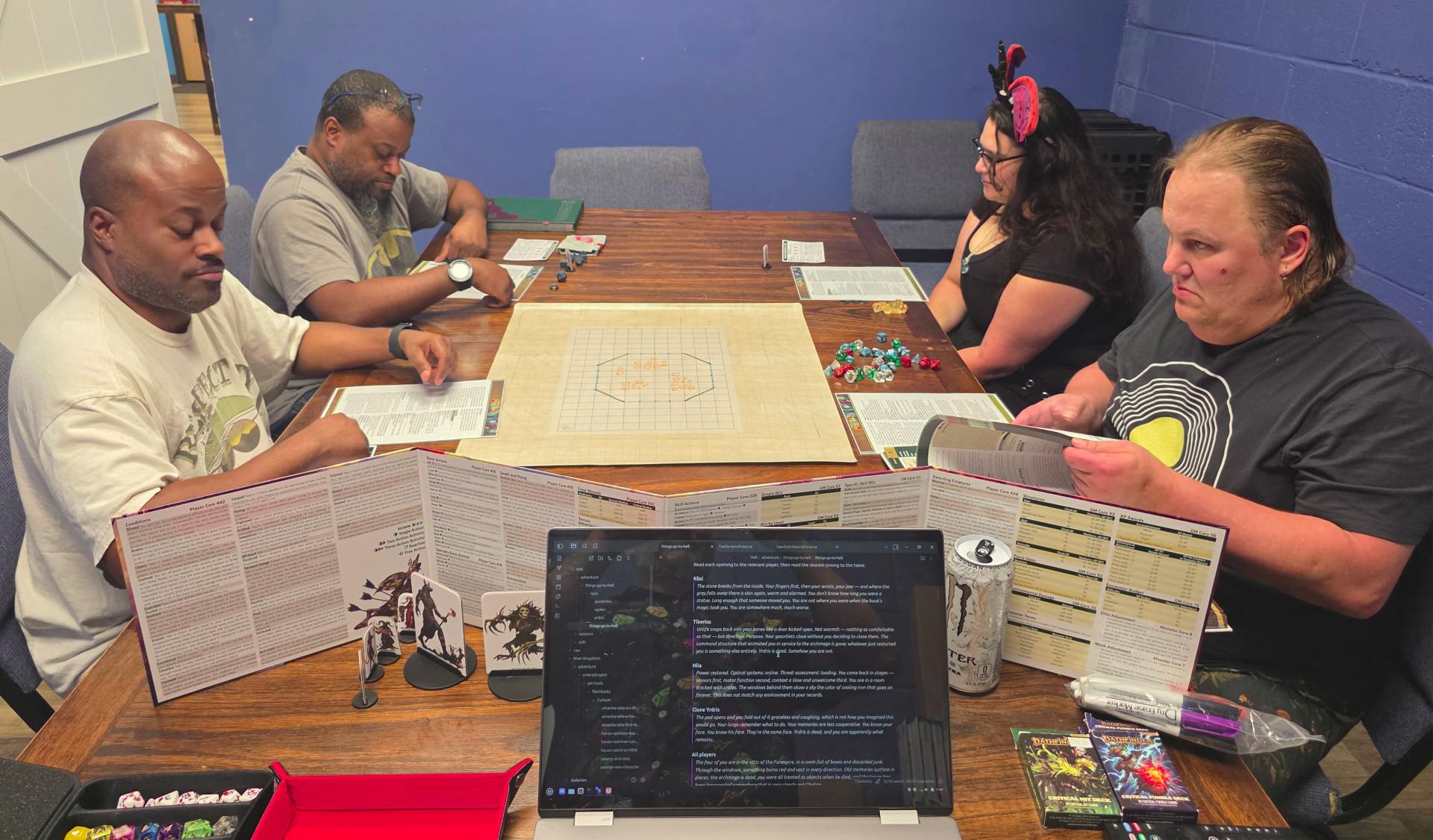
The first read is the whole adventure, cover to cover. No detailed notes yet. I’m building the map in my head. Who the recurring NPCs are, how factions connect, what the campaign is building toward. I keep a note card nearby for plot threads to seed early and hooks to plant before they become relevant.
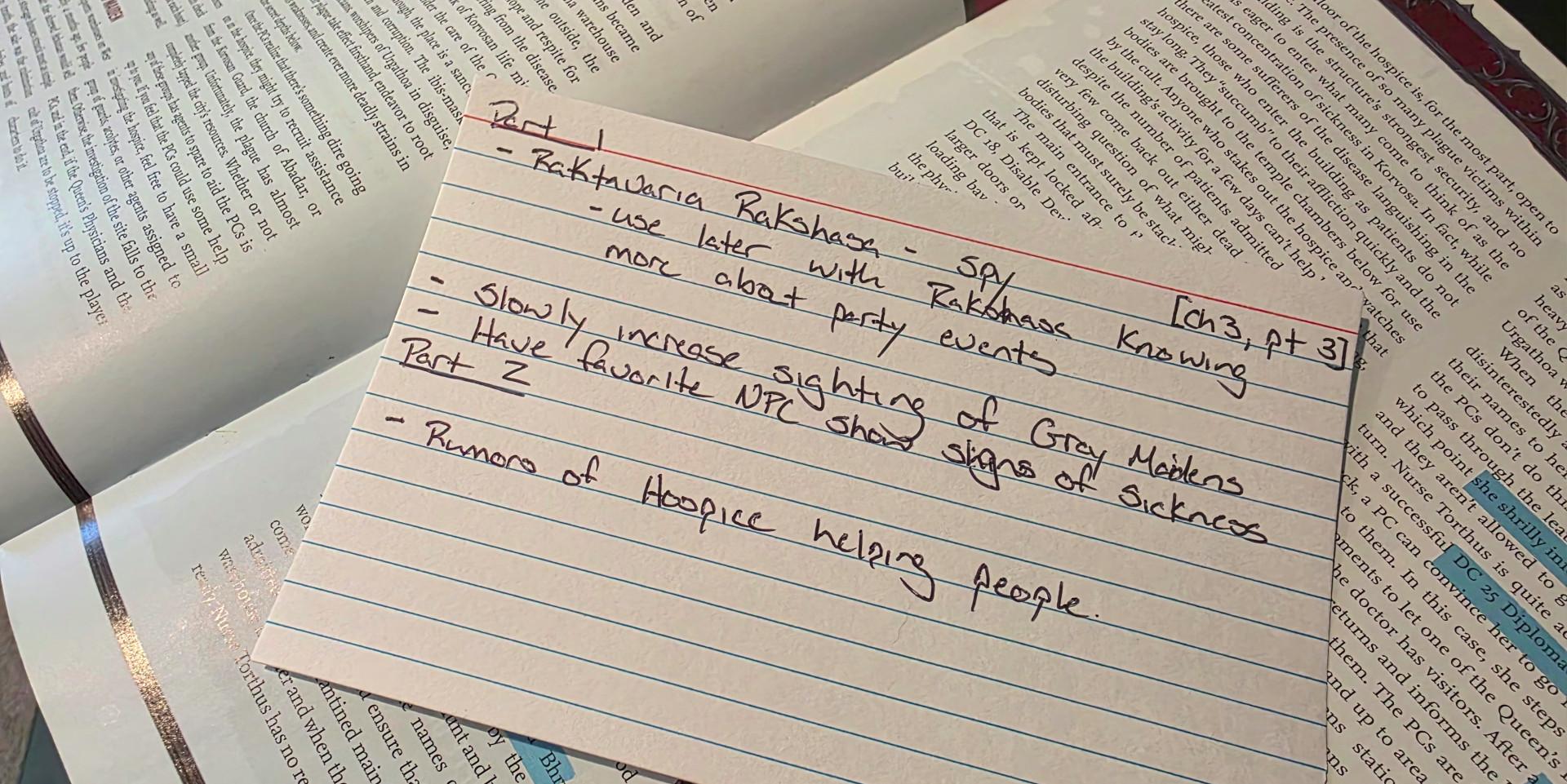
Running Curse of the Crimson Throne, (spoiler alert) I knew from the full read that the queen was collecting blood through the Church of Asmodeus. That detail doesn’t land until much later in the campaign. But knowing it was coming, I started planting seeds early: church members offering copper coins for blood, a favorite NPC showing up with a bandage and a small pouch of coins.
The players noticed. Filed it away and moved on.
When they finally learned what the queen had been doing, every small moment clicked into place.
The second read happens closer to session. Now I’m reading the chapter they’ll actually play. This is when real prep begins.
The Post-It System
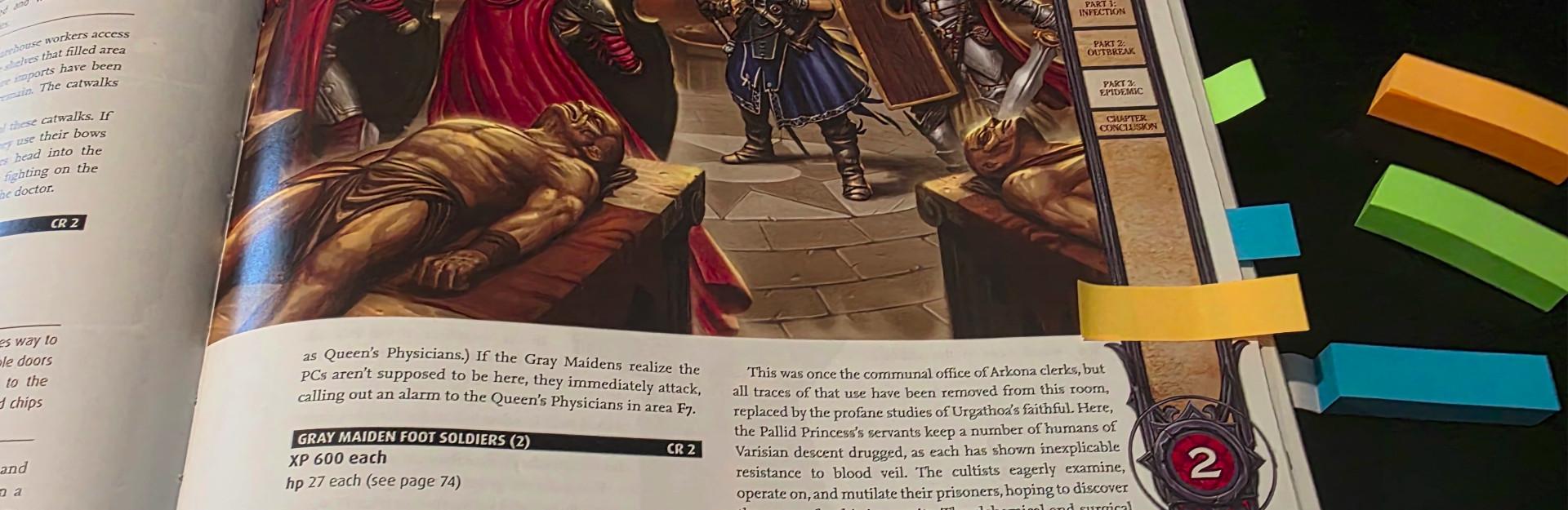
Post-its go on the page to record changes: treasure moved from the back of the module, a monster swapped or repositioned, a trap cut because it would stall the session. Anything that differs from what’s printed. The book stays clean.
They also carry the quick keywords that let me run a scene without reading from the book: sensory cues, NPC mannerisms, the one detail that makes a moment land. More on those in a minute.
I also use highlighter tape on the pages, not highlighters. Removable, won’t bleed through, doesn’t ruin the book. Highlighter tape marks what you need to find fast mid-session: DCs, NPC names, the detail you know you’ll blank on. Not whole paragraphs. Just the exact piece of information you need while four people are watching you.
Obsidian: The Running Document
After the Post-its, I move what matters into Obsidian. This is where the session actually lives.
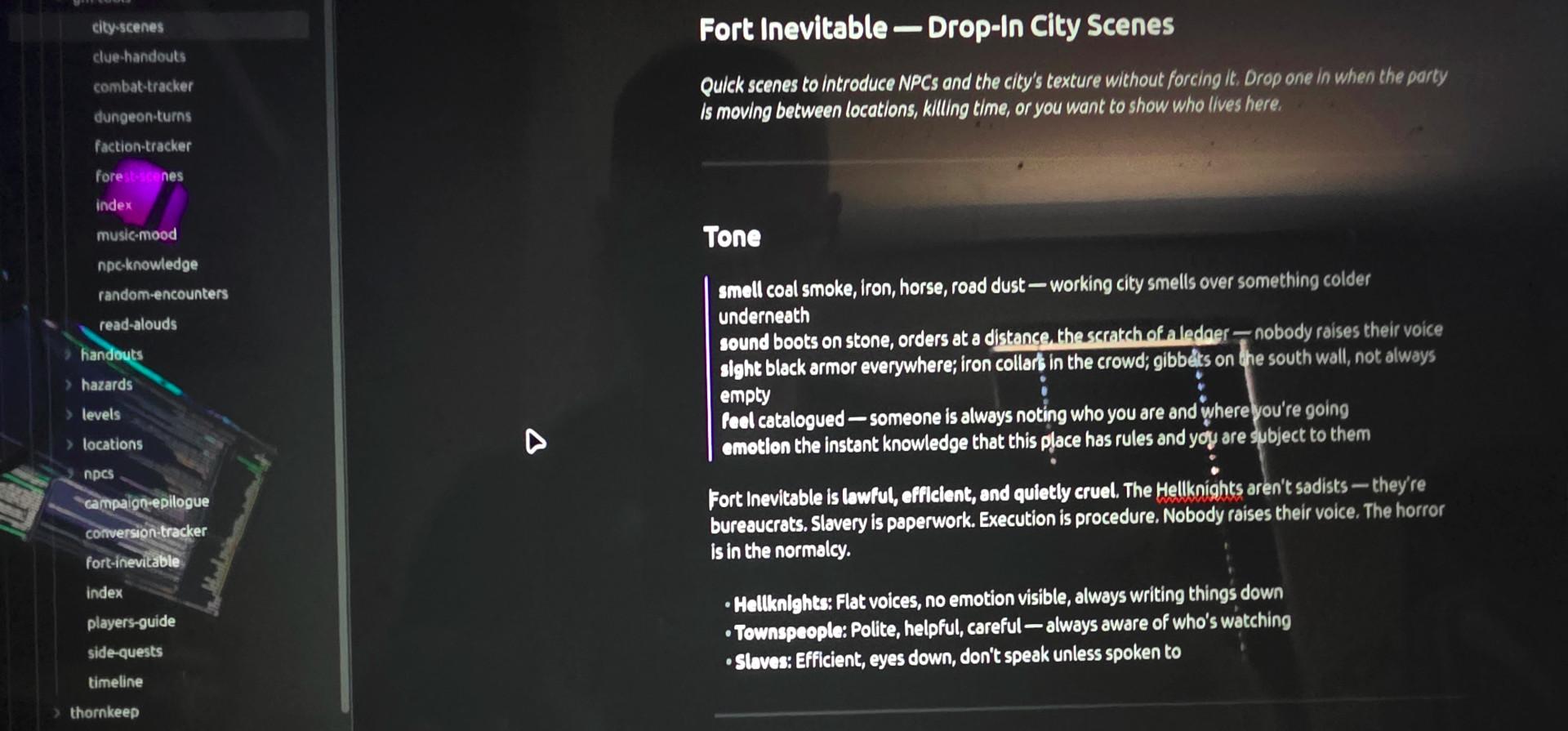
I make notes for music cues in Syrinscape, lighting changes if I have my LED setup running, and scents for ScentedRealms. My GM screen is a custom digital build that displays scene images for players and NPC portraits on demand. Notes for all of that go here too.
My full setup gets its own article. Subscribe so you don’t miss it.
The Obsidian document for a session ends up as: NPC quick-reads, scene notes, sensory cues, and anything I flagged during the two-pass read that needs attention this session.
NPC Format: Quick-Read at the Top
I need to get into character fast. I can’t be stopping mid-scene to read through a paragraph of backstory.
Every NPC who matters gets a quick-read block at the top of their entry: name, a few words of appearance, one distinguishing thing, and what they want right now. The distinguishing thing carries the most weight. A nervous cough. Never makes eye contact. Always eating.
That’s what I read before I open my mouth. Below it I keep fuller notes: history, relationships, how they connect to the adventure, details I’ve picked up from prior sessions. But the quick-read block is what gets the NPC into the room.
These entries evolve. After each session I add notes about how players interacted with the NPC, what they revealed, what the NPC now knows about the party. A living document, not a static one.
I do not write backstories for blacksmiths. An NPC with no speaking lines gets a name and nothing else.
Scene Descriptions: The Sensory Layer
Paizo and D&D publish read-aloud text for most areas. A paragraph you can speak directly to your players. When it’s there, I use it.
Here’s what the boxed text won’t do. It tells you what the room looks like. It almost never tells you what the room smells like, what’s making noise, or what the air feels like. So under each read-aloud block, in Obsidian or on a Post-it right on the page, I aim for a line per sense. The boxed text already covers sight. Smell, sound, touch, taste if the room earns one. And one more line for what the room makes you feel:
Smell: wet stone, old smoke.
Sound: dripping water, distant argument.
Feel: cold floor, low ceiling, the urge to whisper.
I read the boxed text aloud, then keep talking. Players don’t just see the dungeon. They’re in it.
Not every system gives you that paragraph. Shadowdark and most OSR modules hand you a terse room key and trust you with the rest. The sensory lines work even harder there: those few keywords stop decorating the description and become it. Anything worth a second look goes on the same line, so it shows up in my description instead of staying buried in the room key.
Dungeon Turns: Making the Space Feel Alive
The sensory lines make a room feel real. They don’t make the dungeon respond. In most published adventures, enemies wait in their rooms. Nobody reacts to the sound of a fight three doors down. A goblin has been guarding the same hallway for thirty years apparently.
Credit where it’s due: the fix is called a dungeon turn, and it comes from Justin Alexander’s blog, The Alexandrian. His version is a full procedure. You don’t need the full procedure yet. A Post-it on the map does the job.
Creatures in area 4 will investigate if they hear combat in area 2. Roll 1d6. On a 1, the patrol is already here.
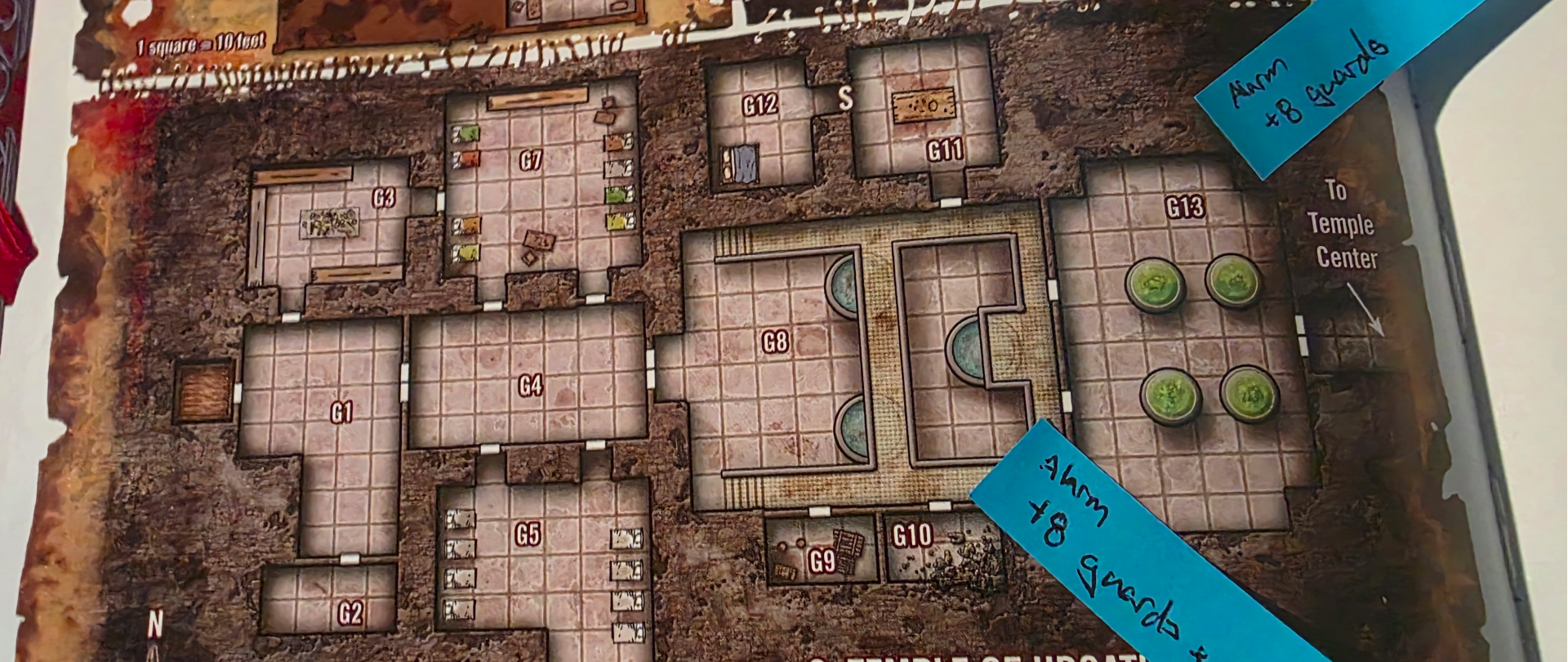
Two notes. Now the dungeon breathes. The party kicks in a door and has to think about what else heard it. An empty room has a chance to not be empty. The space feels like somewhere people actually live, not a theme park waiting for visitors.
When you’re comfortable with that and want to go deeper, So You Want to Be a Game Master by Justin Alexander covers full dungeon turn procedures with patrol routes, reaction chains, and guard schedules. It’s excellent. But start with the Post-it.
The Missing Items Problem
The dungeon isn’t the only place the book makes assumptions. It also assumes the party will find certain items. Miss them and the campaign quietly breaks. A locked door with no key three sessions later. A puzzle with no solution. An NPC reference that means nothing.
I track what they miss.
If the party bypasses a room, I make a note. Then I look for a natural way to reintroduce what was in it. Sometimes they find it later in the adventure, tucked into a different location, still logical. Sometimes a grateful NPC hands them something as a reward, and that something happens to be exactly what they skipped. The party doesn’t know they missed it. They just feel like the GM pays attention to details.
That’s the goal.
When You Have 60 Minutes or Less
Life intrudes. You have an hour and six players showing up.
Here’s the good news: you’re running a published adventure. The encounters, the maps, the NPCs already exist. Your hour goes to three things.
Reread what’s next. The sections your players are likely to hit this session, plus one more in case they move fast. Refresh the NPC names, the DCs, where the treasure sits. This is the highlighter tape paying for itself.
Five names on an index card. Any name generator does the job. I pull mine from the name tables in Tome of Adventure Design by Matt Finch (Amazon | PDF), but the card matters more than the source. You now have an innkeeper, a guard captain, a merchant, a contact, and a spare. Four minutes.
Sitting at the table saying “uh, the innkeeper’s name is... Greg” is survivable. Completely avoidable.
One scene for when they leave the book. Players wander off the adventure’s pages, and an hour of prep doesn’t survive “we go the other way.” Keep a generic scene or two that fits the campaign’s terrain, ready to drop wherever they end up. For Emerald Spire I keep a forest scene and a city scene on standby: sensory keywords and an NPC who wants something. When the party rides off the map, I’m not inventing from nothing.
Then trust the adventure. The structure is already there.
When They Go Sideways
They will. Someone always goes left.
That wanted sign from the top of this post? First session of our Emerald Spire campaign. The player was supposed to connect with Iliara Starcloak, the NPC bringing the party together. His backstory even said his master sent him to find and assist her. He walked into town, spotted the sign, and the rest of my prep stopped existing.
I made Iliara the one who posted it. Not even a pause. When he asked the barkeep where to go about the bounty, the barkeep pointed him straight to her.
He found his contact while chasing the bounty. The session stayed on track. The player felt like he did it his way. The move: let them go left, and make sure left leads somewhere useful.
This isn’t railroading. Railroading is blocking the left turn. This is knowing your material well enough to redirect the consequences. The Obsidian notes and the Post-its make it possible. You know the adventure. You can stretch it.
My players tend to stay on the path. Partly because I make the path interesting. Partly because the left turns still go somewhere.
A published adventure isn’t a script. It’s a map. You still have to walk the ground before you can guide someone through it.
Somewhere in your first session, a wanted sign is waiting for your players too. Know the ground well enough that when they chase it, you don’t even pause.
See you at the table.
If this landed, subscribe. New posts every week. And if you’ve got a table story that fits, drop it in the comments. I read every one.
More GM tips
- Stop Describing Rooms
GM Tip
Stop Describing Rooms
What your read-aloud should tell players instead
July 7, 2026 · 6 min read
GM Tip
The Three Asks
The questions that make your world theirs
June 29, 2026 · 6 min read
GM Tip
Session Zero Ends Before the Tavern
The session where nobody meets anybody
June 18, 2026 · 7 min read