Plan a Villain, Not a Campaign
Session prep for homebrew campaigns
By Blaine · · 7 min read
Greetings all,
We’ve been talking prep. If you’re running a published adventure, start with Prepping a Published Adventure. This one is for the other table. No book. No map. Just you and the blank page. Session zero comes next in the series, so stick around.
I used to plan entire campaigns.
The giant epic kind. An endgame villain at the top and the whole staircase to level 20 sketched before anyone rolled a die.
I have never finished one. Not once. I envy the GMs whose campaigns run all the way to level 20 and land. Mine don’t. I’m lucky when a group reaches level 7. (One reason I love the modern systems that cap at 10. Daggerheart and Shadowdark know something the old guard didn’t.)
Campaigns don’t die in a blaze of glory. They die to schedules. A move, a new job, a baby, a semester, and the table that was five is suddenly three.
All that epic prep, the acts and the endgame villain, was content for a campaign that was never going to exist. I was writing for an audience that wasn’t coming.
So I stopped planning campaigns. I plan villains now.
Plan a Villain, Not a Campaign
You’ve heard “prep situations, not plots.” It’s good advice. It’s also older than some of your players, and it has a hole in it: it tells you what not to build, then leaves you alone with the blank page. Fine, no plots. So what do I actually write down on Tuesday night?
A villain. A small one. Three to five sessions of villain, not fifteen levels of them.
My recipe: someone who wants something right now, close enough to the party to step on their toes by session two, and beatable inside a month of Tuesdays. Where do they come from? Whatever I’ve been reading or watching. Steal the feeling, not the plot. The last horror movie you watched becomes a village that’s too quiet. The heist show becomes a thieves’ guild with a charming face and a ledger someone wants back. The courtroom drama becomes a magistrate who is always, maddeningly, technically correct. The nature documentary becomes something in the forest that has started hunting in patterns.
I told the story in Just Run the Game: my first homebrew was a Shadowrun game run on nothing but love for the setting and zero idea what I was doing. We had a blast anyway. I’ve run the no-prep game and I’ve run the over-planned campaign, and the thing I know now is that the fun never lived in the binder. It lived in whoever the players were fighting that month.
Want the epic anyway? Keep it in your pocket, not your prep. Jot the endgame down in two sentences and put it away. Your current villain can secretly serve some larger plan, and if the campaign lives, the next villain climbs one rung up that ladder. If it doesn’t live, you spent two sentences. The villain in front of the party should still feel like the world end-er, because for these characters, right now, they are.
A villain arc this size has one more advantage, the one that changed how I prep: if the campaign dies, like campaigns do, the story you were telling still got told. A campaign plan dies owing you. A villain arc dies paid in full.
The level 20 campaign you envy? Nobody planned it. It accumulated, one villain at a time.
Stock the Basement
There’s a scene in The Cabin in the Woods where the kids wander into a cellar packed with objects. A puzzle box. A diary. A conch shell. A music box. Every item is a trigger, and whatever they touch decides which monster wakes up.
That’s how I prep the world around the villain.
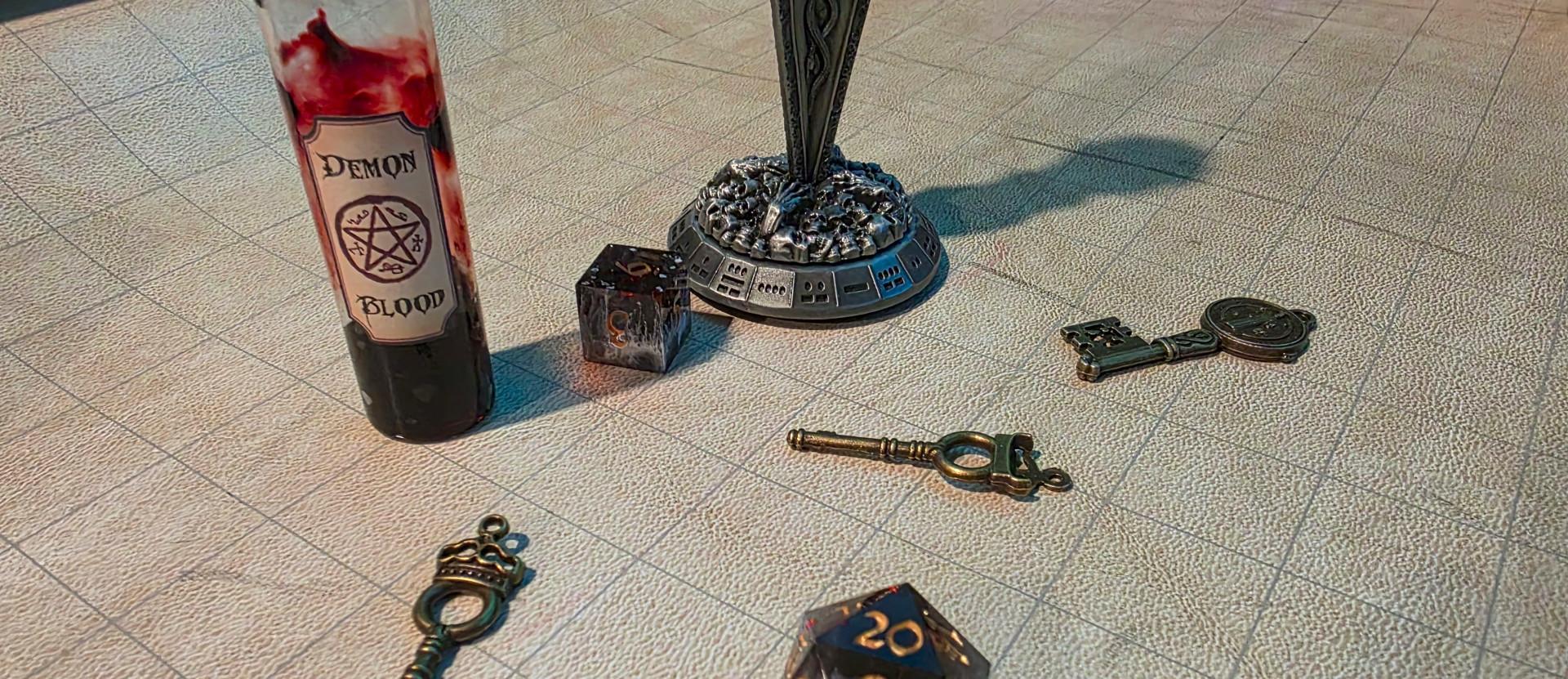
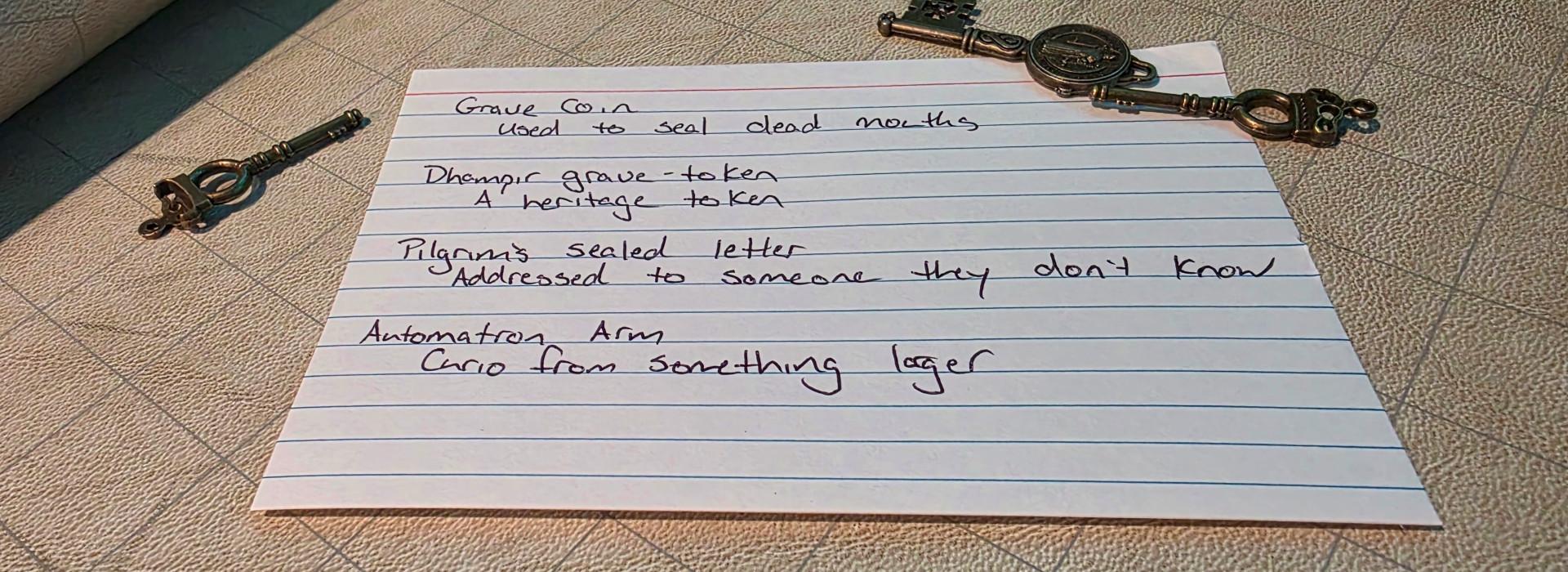
While the party works the current arc, I salt the world with trinkets. A key with no lock. A portrait with the face scratched out. Coins from a kingdom nobody at the table has heard of. A half-finished letter in a dead man’s coat, addressed to someone two countries away.
Here’s the rule: I don’t know what they mean either. Not yet. Each one costs a sentence to place. Foreshadowing implies I know what’s coming, and I don’t. I’m stocking shelves.
Let the Players Choose What Hunts Them
As the villain arc winds down, I watch the table.
Did anyone keep the scratched portrait? Did someone ask the barkeep about those coins twice? Did the rogue try the key in a door it didn’t fit? Is the wizard still carrying that letter around? Whatever they reach for, that’s the next arc. The key finds its lock. The letter’s recipient writes back. The players walk into the basement, pick up the music box, and wake something up.
They’ll never feel railroaded, because they chose it. You didn’t decide six months ago what the campaign was about. They decided last Tuesday, and they don’t even know they did it.
Sometimes the trail leads upward: the villain they beat was working for someone, and the players want to climb. Good. The two sentences in your pocket just became act two. Sometimes they’d rather chase the strange coins. Also good. The pocket keeps.
And if they didn’t reach for anything? Go to the characters instead. Pick a PC, pull a thread from their backstory, and build a small villain on the end of it. The fighter’s old mercenary company resurfaces. Someone in a market crowd recognizes the rogue.
The rare player who writes a real backstory has handed you a drawer full of knives. There’s a community classic called Knife Theory that covers this well: every named person, every secret, every enemy, every unresolved fear in a backstory is a knife the player forged and handed you, so you can stab them with it later. Treasure those players. Stab them often. They love it. (The full knife taxonomy lives in this remaster.)
Most players give you three sentences and a dead parent. Also fine. Invent the missing pieces yourself: a brother who turns up with debts, a neighbor who saw something she shouldn’t have. The player wrote “farm kid from the borderlands.” You decide what’s wrong at the farm. Their backstory becomes a basement you stocked for them, and they’ll still reach for it, because it has their name on it.
The 60-Minute Version
Brennan Lee Mulligan describes his prep as filling a toy chest: “you want the toy chest to be full of toys, because then playtime can happen however it ends up happening.” The plans are not the prep. The toys are the prep.
When life eats your week, three to five toys carry a three-hour session. Mine:
Five names on an index card. Same move as last week, and it matters more here: in homebrew there’s no book to fall back on when someone asks the blacksmith’s name. I roll mine from the name tables in Tome of Adventure Design by Matt Finch (Amazon | PDF). Nobody at your table should ever meet an innkeeper named “uh.”
One encounter skeleton. Who’s involved, what they want, one complication that can shift mid-scene. A reinforcement that arrives late. One skeleton runs ten different ways depending on what your players do.
One strong opening image. The first thing they see, with a question baked in. Not “you arrive at the inn.” The inn is empty at suppertime, and the stew on the tables is still warm. Five minutes in, the whole table is leaning forward, and they did it to themselves.
One scene where the world is just living. A funeral procession that crosses the party’s path. Two dockworkers arguing about a ship that came back empty. The scene wants nothing from the players. It exists so the world keeps moving when they look at it. I build one for every session, published or homebrew.
One trinket for the basement. Costs you a sentence, might be a campaign, and it can ride inside any of the other toys. The funeral procession carries a banner with a sigil nobody recognizes. The empty inn has one bowl of stew gone cold, set apart from the warm ones. Wherever it rides, the shelf gets stocked.
Then trust your players. In homebrew they can’t go off the rails. There are no rails. There’s a villain and a basement full of doors. The rest is whatever they do next.
Somewhere in a closet I still have the notes for campaigns nobody finished. Endgame villains who never got to say their lines. I don’t write for them anymore.
Give your table a villain with teeth and a basement full of strange little objects. Then watch what they reach for. They’ll choose what hunts them. They always do.
See you at the table.
If this landed, subscribe. New posts every week. And if you’ve got a table story that fits, drop it in the comments. I read every one.
More GM tips
- Stop Describing Rooms
GM Tip
Stop Describing Rooms
What your read-aloud should tell players instead
July 7, 2026 · 6 min read
GM Tip
The Three Asks
The questions that make your world theirs
June 29, 2026 · 6 min read
GM Tip
Session Zero Ends Before the Tavern
The session where nobody meets anybody
June 18, 2026 · 7 min read