Sci-fi · Lancer · Mechs · Massif Press
Lancer RPG Review
A tactical mech skirmish game with a light, fast RPG wrapped around it, the most customizable mechs we've read, and a PDF that comes free with the book. Our review of Massif Press's Lancer core rulebook.
From Massif Press
- Format
- Hardcover (comes with the PDF)
- Pages
- 430
- Price
- $59.99 list, $46.48 on Amazon
- Type
- Rulebooks
- Best for
- Groups who love tactical combat and building mechs
We re-scored Rules after playing it (follow-up video below): Blaine 20 to 16, Joe 17 to 15.
Filed under rulebooks and starter sets. How we score
What works
- The most customizable mechs we've read: your frame is your class, and you can mix parts from other frames as you level
- Light, fast rules out of combat, tactical skirmish combat in it
- Encounter building close to Pathfinder's, with NPC roles plus templates
- The player rules and the app are free, and the PDF comes with the book
- Art from many artists that still feels like one cohesive vision
What doesn't
- You can push a roll out of combat, but not in combat, where you spend most of the game
- A steep learning curve, and the premade mechs make it steeper
- Out-of-combat rolls have complications but no stunts or extra success on a great roll
- No maps of the galaxy, and a few sections are worded in a confusing way
- No alien threats in the core book, so conflict stays human vs. human
Affiliate link. It costs you nothing extra, and we may earn a small commission.
Yes, if you like your combat tactical. Lancer is a 17 out of 20, a Hit. It's a mech skirmish game with a light, fast RPG wrapped around it, and both halves are good. Blaine called it almost a perfect blend for him. Joe, who leans toward investigation and social play, found the out-of-combat side thinner, but he'd still happily run it and is even more excited to play it.
What we reviewed
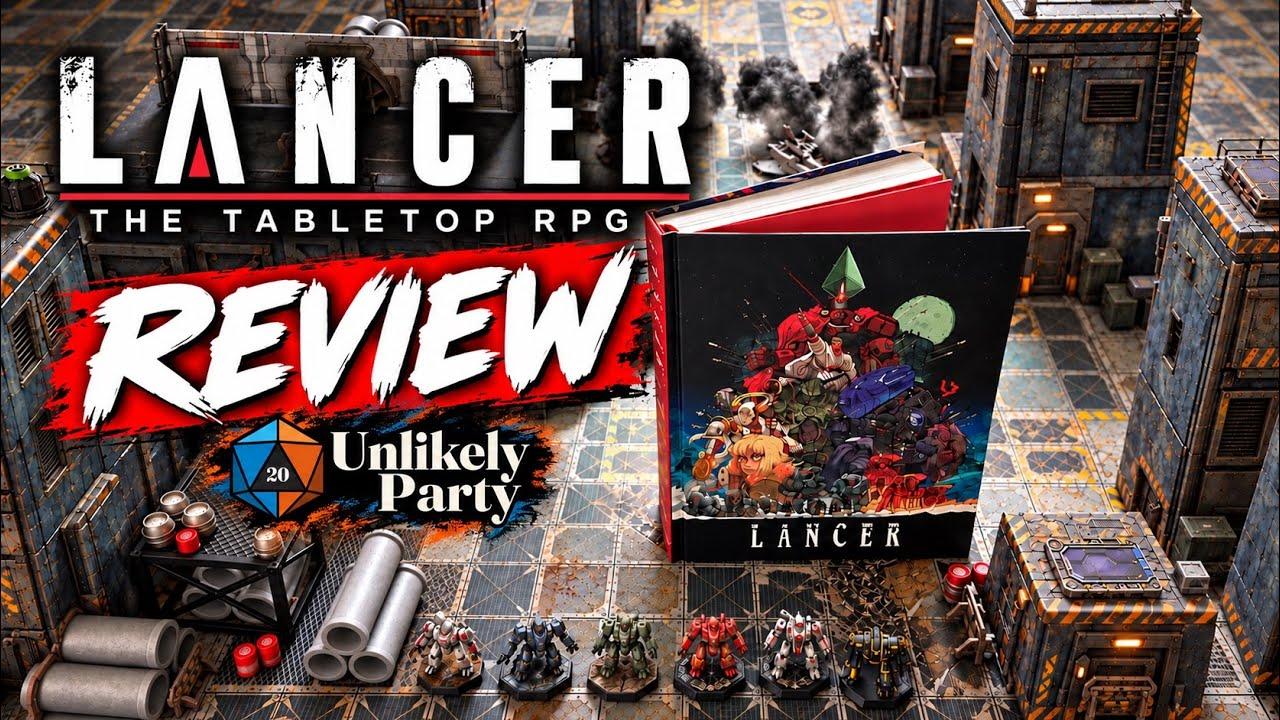
The Lancer core rulebook from Massif Press, a 430-page hardcover. Blaine bought it on Amazon for $46.48; the MSRP is $59.99. Blaine has played a session with it, so this review is labeled Played.
RulesJoe15/20Blaine16/20
Out of combat, you roll a d20, add a trait, and try to hit 10. Accuracy and Difficulty are d6s: they cancel each other out, then you roll what's left and add (or subtract) the highest. If you miss, you can push the roll and try again, but it becomes risky: you still succeed on a 10, and anything under 20 brings a complication. In combat, you roll against the target mech's Evasion instead of 10.
The combat is the crunchier half. Joe would normally count crunch as a con, but here it's streamlined and intuitive. His first read was that it's "a miniature skirmish game with RPG elements," and he meant that as a compliment. Blaine, who grew up on Palladium's crunch, called it crunch light, and for him it's almost a perfect blend. The narrative side is a minimalist resolution system that handles investigations, social scenes and heists, and the downtime activities have real outcomes.
The mechs are the heart of it. Your frame is basically your class, and as your license level grows, you can tier it up or mix in parts from other frames. Instead of being the healer for a whole campaign, you can pick a different mech for each mission: stealth for a heist, assault for a straight fight. There's a briefing phase where the crew plans the operation and kits out for it, and Joe liked that failure is a real possibility. This isn't a game that holds your hand.
The GM section is one of the best we've seen for building encounters, close to Pathfinder's. You pick roles for the enemies and add templates to adjust them, like grunts with a single hit point that players can blast through on the way to the boss.
Joe's first criticism is one we both ended up agreeing on. Out-of-combat rolls have complications, but no upside on a great roll: no stunts, no extra success, no opportunity. Downtime has tiered results, and combat has critical hits, so it feels like the skill side just got forgotten. Joe's house rule is simple: a 20 gets you a stunt, and every 5 above that gets you another.
On our first read, Blaine agreed it was a missed opportunity but stuck with a 20, and Joe gave Rules a 17. Then we played it.
After playing it
We played about four hours of Solstice Rain, the introductory scenario, with Robert running his first game ever (you can watch our interview with him right after). Playing it changed our Rules scores, so we made a follow-up video.
Joe's verdict: Lancer is a miniature skirmish game first and a role-playing game second. The skirmish game is better than many skirmish games, and the RPG side is better than many RPGs, but the rules are built for the fight.
The big surprise was pushing. You can push a roll out of combat, and Joe called that his favorite part of the game. Blaine is the one who caught that you can't do it in combat, where you spend most of your time. Outside of Accuracy dice, nothing lets you influence a roll in a fight. We played half the session with pushing in combat by mistake, and it worked: Robert turned complications into overheated weapons, empty clips and jams that cost a quick action to fix. Joe wouldn't play without it now.
It's also a lot to learn. The rules have exceptions, and exceptions to the exceptions, and the customization adds another layer. Blaine read the book and built his own mech; most of the table used premades with little context, and halfway through a fight, Joe found an ability on his that changed everything. His advice: before your first game, sit down with your players and build the mechs together.
We still had a blast. Blaine kept picturing himself in his mech, fighting through a city, and Joe said it scratched an itch for skirmish games he'd been missing. The crunch is what makes it feel like you're piloting a mech.
Blaine dropped Rules to a 16. He likes rules that match: if players can push in narrative play, they should be able to in combat too, or they'll forget where they can. Joe dropped his to a 15: "a good game for the right group." He still wants to play it again.
LayoutJoe16/20Blaine18/20
Lancer reads the way a rulebook should: a short intro, how to play, character creation, then the mechs, then the setting. It's utilitarian, and you'll find what you need quickly. The art is the standout. It comes from many artists but feels like one cohesive vision, which pulls you into the world.
That's also the complaint. The art is so good we wanted more of it, and Joe wished more of the pages pulled you into the theme the way Free League's books do. Blaine wanted maps of the galaxy, and a couple of sections were worded in a way he had to reread. Joe gave Layout a 16. Blaine gave it an 18.
SettingJoe15/20Blaine14/20
Far in the future, humanity's Union claims to have built a utopia and is pushing it out across the galaxy. The factions are distinct and full of hooks, and the conflict is corporate intrigue and politics. There are no alien civilizations in the core book, so it stays human vs. human. Blaine called that a missed opportunity, and Joe pictured what it could have been: an unstoppable force moving through the galaxy, like StarCraft's Zerg or Warhammer's Tyranids, that the factions have to unite against.
Joe liked the simplicity: the setting stays out of the way of what the game is really about, the mechs. Joe gave Setting a 15. Blaine gave it a 14. It's a good setting, just not his.
ValueJoe20/20Blaine20/20
The MSRP is $59.99 for a 430-page hardcover, and you can find it cheaper on Amazon. A QR code on the second page gets you the PDF and extras like character sheets. The player-facing rules and the app are free, so your players can play without buying anything. We both gave Value a 20.
Who it's for
Groups who love tactical combat and building things. If you want to tinker with a mech between missions and plan an operation before you deploy, this is your game. If your table lives for investigation and social play, you'll want to house-rule some upside into those rolls.
The verdict
A Hit, for the right group. The best mech game we've found, with a fast RPG around it and a generous price. Let players push in combat, add a stunt rule for great rolls, build your mechs as a group, and it's even better.
Affiliate link. It costs you nothing extra, and we may earn a small commission.