Fantasy · Twilight Sword · Two Little Mice · Zelda · Rules-light
Twilight Sword RPG Review
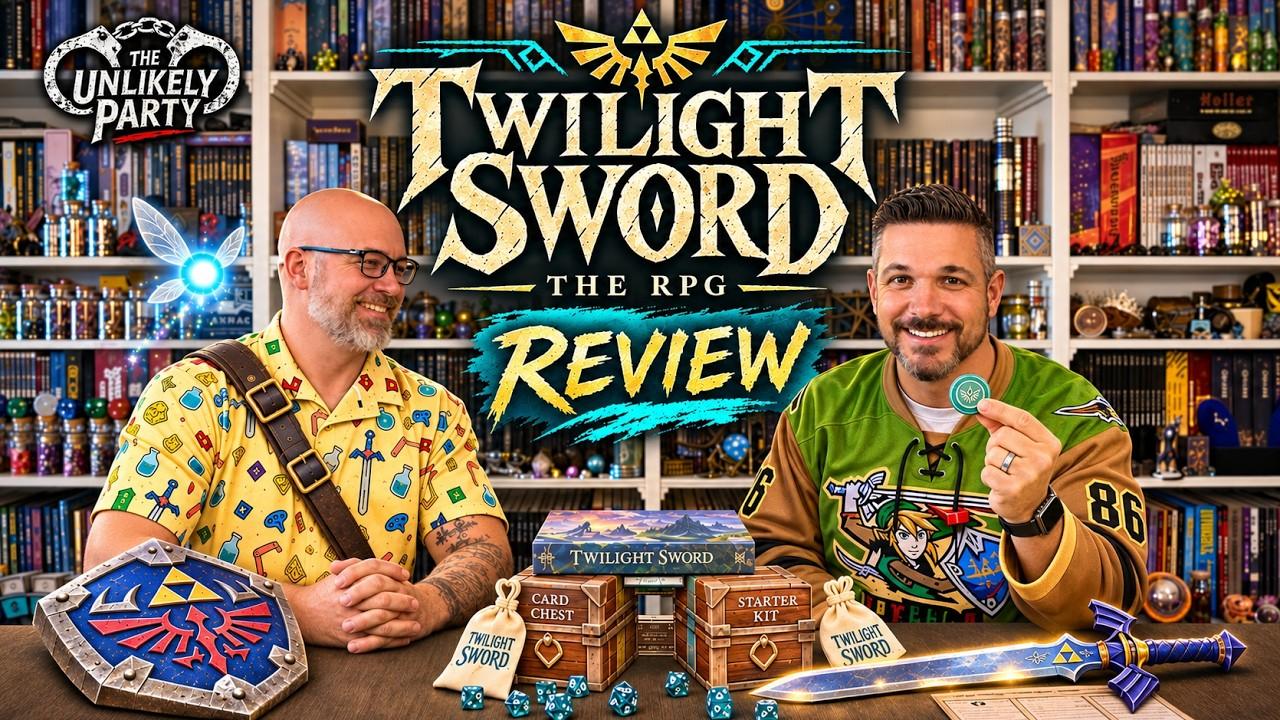
Joe's favorite game to run for kids, a camping minigame Blaine wants to steal, gorgeous art, and our most split scores yet. Our review of Two Little Mice's Zelda-inspired Twilight Sword.
From Two Little Mice
- Format
- Half-size hardcover, PDF for backers
- Pages
- 202
- Price
- $51.11 on pre-sale at Free League
- Type
- Rulebooks
- Best for
- Families, kids and new players, and anyone who wants a Zelda-style game
Setting is judged on the core rulebook. The world mostly lives in the Lands of Radia setting book and the starter box, which Joe drew on and Blaine hasn't read yet.
Filed under rulebooks and starter sets. How we score
What works
- Roll a d12 under one of eight abilities. No skills to learn, and new players pick it up fast
- Stamina lets players buy advantage, use feats or get a spell back, so they control their big moments
- Foraging, cooking and potion brewing make a camping minigame worth stealing for other games
- Monsters act from random action tables and mostly just hit, so the rolls stay with the players
- Some of the best art we've seen in a TTRPG, on every page
- A half-size book you can carry to the game store in a pocket
What doesn't
- One random player starts with a Boon and nobody else does, and the book suggests giving out only one per session
- Encumbrance is an odd rule to make core when most of the crunchier rules are optional
- The core rulebook has only a few pages of setting
- $51 on pre-sale for a 202-page, half-size book
Not an affiliate link. We don't earn anything from it.
For the right table, yes. Twilight Sword is a 16 out of 20, a Hit, and it's the most we've ever disagreed on a game. Joe ran it for his 11-year-old daughter and four of her friends, and it's now his favorite game to run for kids. Blaine loves the rules and the art but can't get past the price of a half-size book. If you've ever wanted a Zelda tabletop game, this is it.
What we reviewed
The Twilight Sword core rulebook from Two Little Mice, a small, ENNIE-winning studio from Italy. It came out of a 2025 BackerKit campaign, and Free League sells it in its store. Joe backed it and ran a three-hour game from the PDFs, which backers got before the books shipped. Blaine read the core rulebook.
A new campaign, Twilight Sword & Monster Book, launched on BackerKit on November 10, and we both backed it. It adds monsters, friendly beasts, loot, and a new Way of the Beast with a beast companion.
RulesJoe16/20Blaine17/20
Twilight Sword runs on a d12. Your abilities are your skills: Strength, Agility, Vitality, Perception, Will, Knowledge, Charisma and Stealth. To do something, you roll under the ability. That's most of the game. Special abilities come on cards, so nobody has to memorize anything. Joe calls it rules-light, not minimalist. There are more rules than you need, and you can ignore a lot of them, the way he did with a table of 11-year-olds.
What lifts it above other kids' games for Joe is Stamina. You start with three and can grow to eight. Spend one before a roll for advantage, which in this roll-under game means rolling 2d12 and keeping the lower. You can also spend it on a feat or to get back a spell you've already cast. Spells have no levels, so you can have fireball at first level, cast each spell once a day for free, and use Stamina to cast it again. Blaine, who spent his AD&D years as the wizard with one spell a day, loves that part.
"I'll never rate a game well if it doesn't give the players some agency over their success." (Joe)
Boons are the rarer currency, a bit like Hero Points in Pathfinder or focus in the Cosmere RPG. You earn one by doing something heroic that brings hope to the party or the people you're helping. Joe's group earned two or three in a single session, and handing a kid a hefty poker-chip token with Zelda-style art on it landed. Our shared gripe: the rules start one random player with a Boon and nobody else, and the book suggests giving out only one per session. On camera we both said we'd start everyone with none and let them earn Boons in play, which is how Joe ran it.
Blaine's favorite rule is foraging. Someone gathers mushrooms, someone at camp cooks them, and the meal comes with real benefits. Brewing potions works the same way. He plans to steal it for Pathfinder. Monsters are just as easy on the GM. An encounter is worth 1 to 1.5 times the number of players, monster cards list their actions, and you roll to see which one they take. Most monsters just hit, so nearly every roll at the table is the players'.
Blaine's other nitpick is where the crunch shows up. Weapon durability is an optional rule, and so are most of the crunchier rules. Encumbrance, oddly, isn't. Joe's answer: for players over 15 or so, turn on all the optional rules. It stays rules-light even then.
Joe gave it a 16 because a game this light has to stand next to Mörk Borg, Shadowdark and the rest of the rules-light shelf. Blaine started at a 16 and stuck with his 17.
LayoutJoe19/20Blaine19/20
This is where Twilight Sword shines. The art is on every page, it's consistent, and Joe thinks some of it beats the games it borrows from. Blaine puts it second only to the Alien RPG on his shelf. The page design matches, with themed borders around every block of text.
Joe has a theory for why it hangs together so well: a small team. Two authors, one lead artist, one person on maps and landmarks, one on weapons and monsters, and three graphic designers. Compare that to the huge team behind the Dungeon Crawler Carl core rulebook, where we gave the layout a 1.
The one ding is size. The books are less than half the size of a normal rulebook. That means more page flipping, but also a game you can carry to the game store in a pocket, with the GM screen. Blaine prefers a bigger book, started at an 18, and moved to a 19 after Joe's case for the art.
SettingJoe17/20Blaine10/20
Twilight Sword wears its inspirations openly: The Legend of Zelda, Dragon Quest, Wonder Boy in Monster Land, Final Fantasy, Ni no Kuni and the films of Studio Ghibli. Above all, it plays like Breath of the Wild. The adventure in the starter box opens the way that game does: you wake on a floating island with no memory and solve puzzles to get into a temple. Joe loves how much it leans on puzzles and riddles, which few games do.
The core rulebook itself has very little setting, about four pages. The world lives in the Lands of Radia setting book, which also holds the campaign, and in the starter box. Joe gave it a 17: it borrows from Breath of the Wild rather than doing something new, and he's fine with that. Blaine scored only the core rulebook and landed in the middle at a 10, and may update it once he reads Lands of Radia.
ValueJoe18/20Blaine8/20
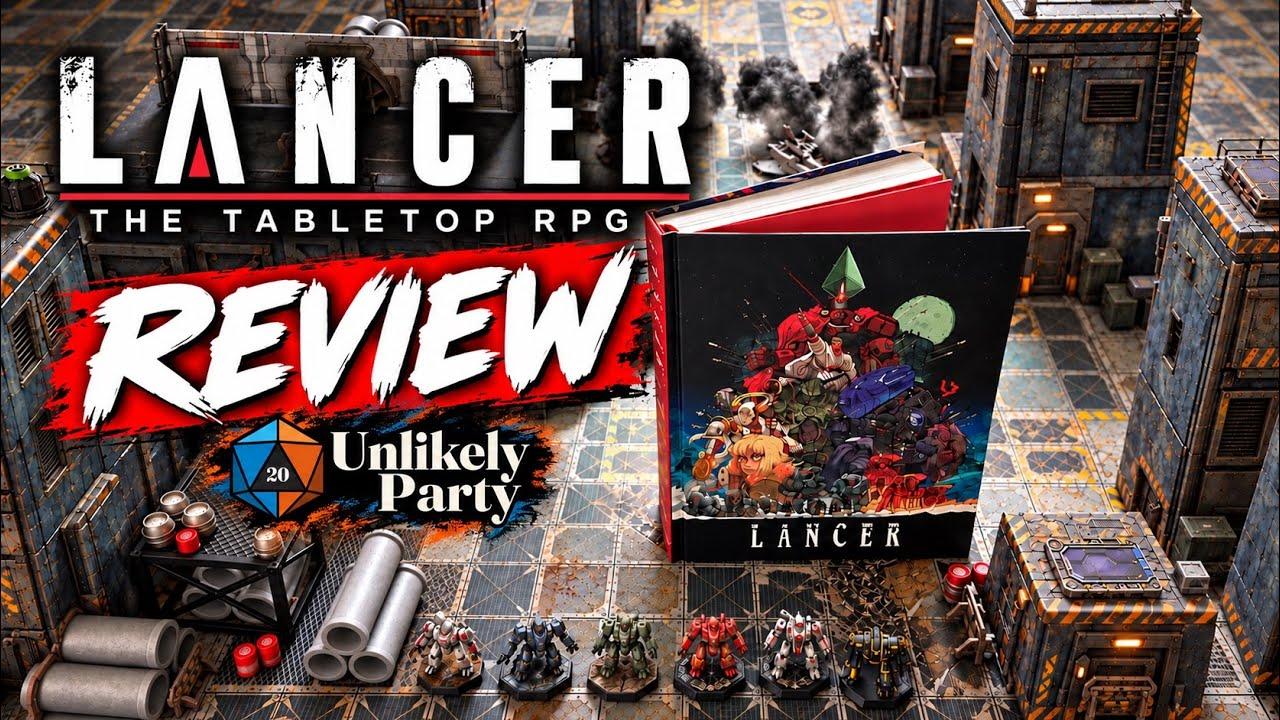
This is our biggest split. On pre-sale in Free League's store, the core rulebook alone was $51.11, for a 202-page, half-size book. Blaine compares that with Lancer, where $59.99 gets you 400 pages, and gave value an 8. You're mostly paying for the art.
Joe gave it an 18. The art is worth it to him, and the line is unusually well supported from day one: the Lands of Radia setting book and campaign, champion journals, a GM screen, a starter box, a card chest, dice and the boon tokens. He bought three bags of those.
“Yes, it's expensive. But quality is expensive.”
Who it's for
Families, kids and anyone running their first game. Joe's daughter and her friends played for three hours and asked for another game night, and it's the game he'll bring to kids' one-shots at conventions. Free League lists it for ages 14 and up, and it works for older groups too, especially with the optional rules on. If your adult group wants a Zelda game, this is the one. If they want deep, crunchy combat, look at Lancer or Pathfinder instead.
The verdict
A 16, a Hit, with an asterisk: our finals are four points apart. Joe's 18 says it's the best kids' game he's found and worth every dollar. Blaine's 14 says great rules and gorgeous art, at a steep price for its size. Tell us who's right in the video comments.
Not an affiliate link. We don't earn anything from it.