Fantasy · Draw Steel · MCDM · Tactical
Draw Steel: Heroes Review
The cleanest negotiation rules I've read, inside a tactical game where you never miss. Great for the right table, but a GM has to work hard to plan encounters and rewards.
From MCDM Productions
- Format
- Hardcover with PDF, or PDF
- Price
- $69.99 hardcover, $29.99 PDF
- Type
- Rulebooks
- Best for
- Tables that love tactical combat, and GMs with time to prep
Joe no score/20Went cyberpsycho. MaxTac is handling it.
Filed under rulebooks and starter sets. How we score
What works
- Negotiations are one of the best social encounter systems in any game
- Montage tests are just as good
- The same three tiers on every power roll keep it simple
- Ancestry traits bought with points, plus a signature trait
- Builds feel different at every level
- Victories carry momentum from one fight into the next
What doesn't
- Every reward runs on a different clock, so tracking who has earned what takes a spreadsheet
- Encounter building lives in the Monsters book, so a GM needs both
- Everyday craftables like potions aren't listed with the crafting rules
- A simple session took me hours to prep, about four times what Pathfinder takes
Not an affiliate link. We don't earn anything from it.
Draw Steel has the cleanest negotiation rules I've read, inside a tactical combat game where you never miss. For a table that loves tactics, it's great. For me as a GM, planning encounters and rewards was a slog, and after a few sessions, never missing got boring.
What I reviewed
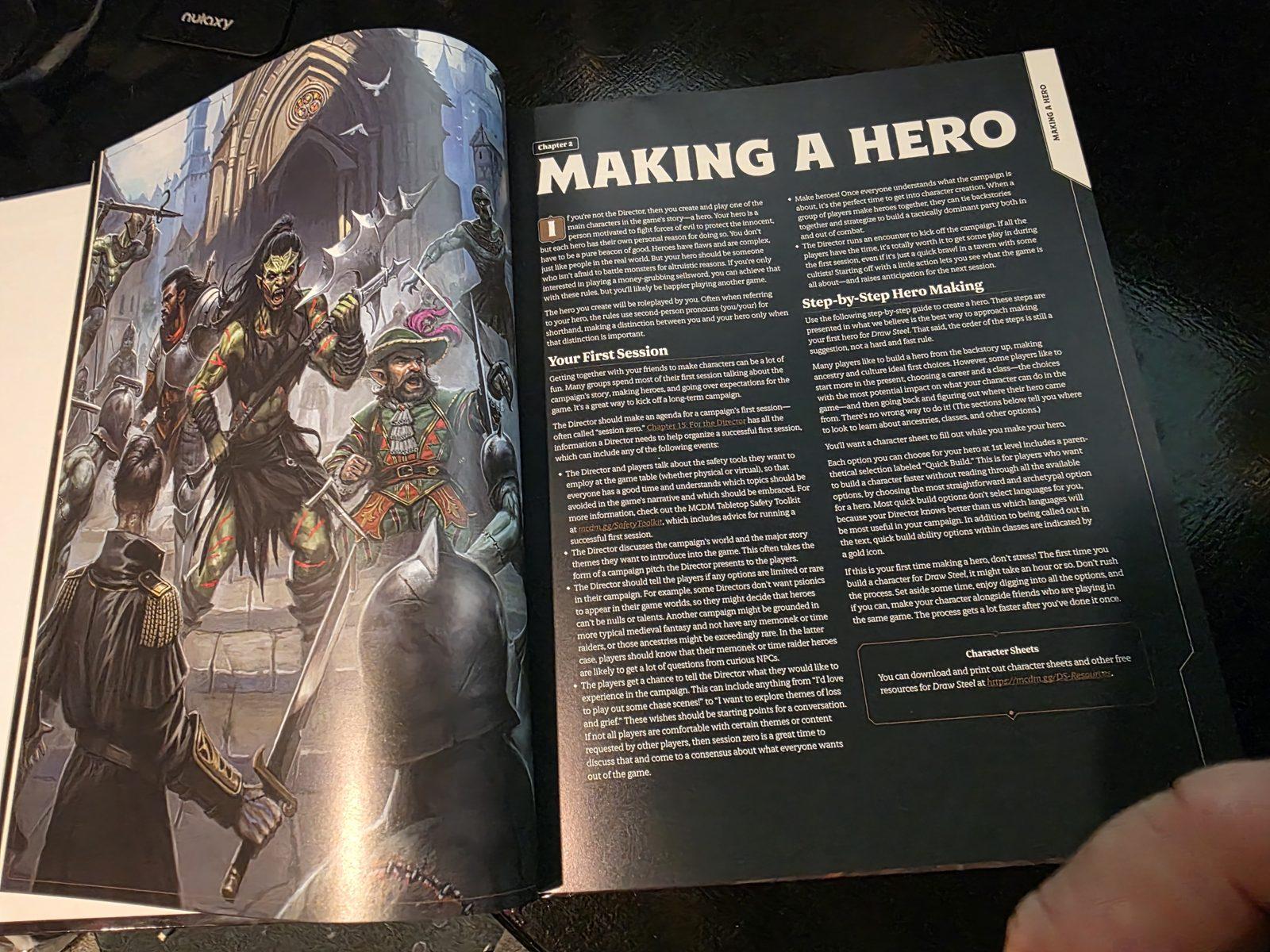
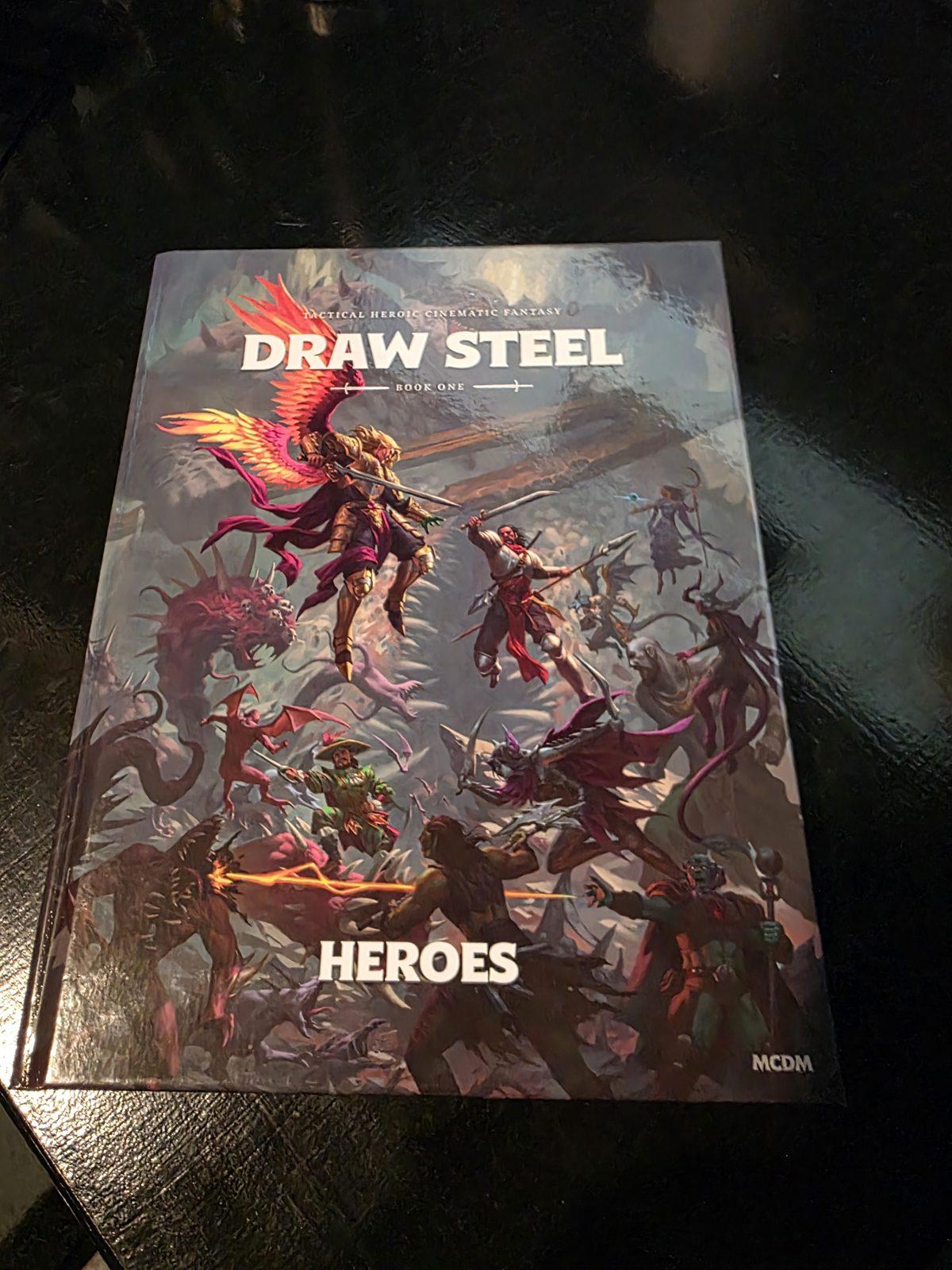
Draw Steel: Heroes is the core book from MCDM: player and GM rules in one. The monsters are in a second book, Draw Steel: Monsters. I backed it on BackerKit and got both books in print. I've run it for a few sessions, so this is a played review of Heroes. Monsters gets its own review.
Rules14/20
Power rolls use 2d10 instead of a d20, and every roll lands in a tier: 11 or lower is tier 1, 12 to 16 is tier 2, and 17 or higher is tier 3. You never miss. An attack always does something, and the tier decides how much damage and what effects you get. Edges and banes add or subtract 2, you can stack a double edge or a double bane, and they cancel each other out. The same three tiers show up on every power roll, which I love. It keeps things simple. Lancer and the DCC core rules only use tiers in some places.
Each class has its own heroic resource, and winning battles earns victories, which start you off in the next fight with more of that resource. It's a nice way to carry momentum. Hero tokens are the game's take on hero points.
Character building is where it shines. Each ancestry has a signature trait, and you buy more traits with points, so a Devil can take Hellsight or a Prehensile Tail. You pick a career for skills and other benefits, then a class, and there's a great variety of classes. Every level gives new abilities and perks (Draw Steel's version of feats), so builds feel different from each other.
The best part of the book is negotiations. I haven't run one at the table yet, but the mechanic is clean and, honestly, perfect. Every NPC has motivations and pitfalls, plus two numbers: Interest and Patience. Their starting attitude sets both. Appeal to a motivation and their Interest goes up; hit a pitfall and it drops on its own. Your job is to get their Interest high enough before their Patience runs out, and where their Interest ends up decides the outcome. It's one of the best social encounter systems in any game.
Montage tests I have run, and they're easy. The party needs a set number of successes before a set number of failures, over two rounds. Every player does something to add to the scene, and you end up with a total success, a partial success, or a total failure, each with its own outcome. Mine was a race to a walled inn, a lone stop for travelers out on the road, with goblins on the party's heels. They pulled off a partial success: they got the inn's gates shut, but the goblins were right outside. No rest for them, and the guards took longer to get ready to help. A partial success that still changes the next scene is exactly what I want from a skill challenge. Crafting runs on projects, and every item lists its own project points, which I like. I'd have liked a better list of craftables, though. The examples lean toward enchanting items and big story goals like finding a cure or building a teleportation platform. Healing potions and other everyday items do have project points, but they're in the item entries at the back of the book.
That's where my likes end. As a GM, I found it very hard to plan encounters and hand out rewards. Magic items, titles, Renown and wealth are all in the game, and the book does give pacing for them, but every reward runs on a different clock. Leveled treasures are counted by 10th level, trinkets per echelon, consumables every level, titles and wealth every other level, and Renown every level. I don't want a spreadsheet to know whether a character has gotten something yet. I want one table that says what the party gets each level, like Pathfinder has. A simple session took me hours to prep, about four times what the same session takes me in Pathfinder.
At the table, never missing got boring for us. Critical successes and failures are often the highlight of a night, and without them, fights turned into move and hit. It makes Draw Steel extremely tactical. If that's your table, you'll love it. It wasn't ours.
Layout17/20
The book is clean and laid out the way you'd expect from a TTRPG. My issues are with where things live. The guidance on granting rewards is tucked at the back of the book, and encounter difficulty is in the Monsters book, so a GM needs both books open to plan a fight.
Setting11/20
The setting isn't a big part of Heroes, and what's there didn't hook me the way Pathfinder or the Forgotten Realms did.
Value14/20
Heroes is $69.99 for the hardcover with the PDF, or $29.99 for the PDF alone, from MCDM's shop. That feels expensive for one book, and a GM needs Monsters too: both in print with PDFs is $129.99. If you're curious, the PDF is the better deal. It's worth it for the right table: one that loves tactical combat.
Who it's for
Tables that love tactical combat and want every turn to matter, and GMs with the time to prep. If your table lives for the big crit and the big fumble, or you want rewards laid out level by level, look elsewhere.
The verdict
A Graze. The negotiation and montage rules are some of the best around, and character building is a blast. But planning encounters and rewards is a slog, never missing wore thin at my table, and a GM is in for $129.99 to run it.
Not an affiliate link. We don't earn anything from it.