They Have to Open the Door
Horror writing advice assumes you control the victims. At the table, you don't.
By Blaine · · 11 min read
Greetings all,
This is part two of our October horror run. Last week we gave the darkness its teeth back. Next week, we take over the room. This week is the story itself.
Nobody makes Frank open the box.
In Hellraiser, he buys the puzzle box, sits down on the floor of an empty room, and works it until it opens. Everything that comes after, the hooks and the chains, he asked for.
Since I backed 13 Omens on Kickstarter, I've been daydreaming about turning my favorite horror movies into stories for it. Hellraiser. The Cabin in the Woods. Killer Klowns from Outer Space, to name just a few. Which sent me down a hole of reading everything I could find on writing horror, and writing horror for the table in particular.
Here's what I found. And here's the part most of it misses.
Spoilers ahead for The Haunting of Hollybrook, the story in the 13 Omens backer preview. If you're going to play it, stop here and come back after.
The victims hold the pen
Most horror writing advice is written for novelists. Reedsy's guide to writing a horror story is a good one. Start with a fear. Pick your subgenre. Make the stakes plain. Use the point of view to keep the reader close.
All of it assumes one thing you don't get as a GM. The writer controls the victims.
A reader can't stop the girl from going down into the basement. Your players can. And they will. They'll call the cops and sleep in the van.
A scared character in a novel does what the plot needs. A player at your table does what keeps their character alive, and they aren't scared at all. They're sitting in your dining room with a soda.
So you can't push them through the door. They have to open it.
The Cabin in the Woods makes that a literal rule. The people running the ritual can steer the kids all they want, but the kids have to choose their own doom. They go down into the cellar and pick up the objects themselves. One of them reads the Latin out loud.
So build a story your players walk into on their own.
Start with a seed
The best thing I read was Justin Alexander's notes from a Sandy Petersen seminar. Petersen wrote Call of Cthulhu. He's been doing this longer than most of us have been playing.
His method starts with a seed, and the seed is three picks.
First, an image. A strong, emotionally powerful scene, and Petersen says you can lift it straight from a movie or a book. His example is the rabbit headed for the fire in The Velveteen Rabbit. It's the feeling you want sitting in the players' chests when the story's over. (Good news for me. Frank on the floor with that box is an image.)
Second, a place. Not "a dungeon." Petersen's example is a hot spring: specific enough to picture, ordinary enough that your players can imagine standing in it.
Third, an opponent, and it has to be malign. Not misunderstood, not a tragic monster who wants to be left alone. It wants something, and it'll hurt people to get it. Petersen's is a 500-year-old undead ancestor.
On their own, those three don't go together. That's the point. Making them fit is your story. In Petersen's version, the ancestor is tied to the hot spring, one of the characters is his descendant, and his plan is a family reunion so he can move his mind into a fresh body. The family keepsakes hold pieces of his old bodies, which is where the fire comes back in. There's the rabbit.
The seed starts in your notes. Eventually you have to hand it to your players, and there are plenty of ways to do that. You can spread it across a whole act: the place first, a glimpse of the opponent later, the image right before the end.
13 Omens does it all at once. Every story opens with a prologue the Host reads aloud, and the players' characters aren't in it. The book says it's there to set the stage and get the players in the mood. It does more than that.
Hollybrook's prologue follows a hitchhiker caught in a storm on the Oregon coast. He slips into an abandoned inn on the edge of a cliff and gets a fire going in the ruined great hall. He's so busy with it that he never sees the squat, broad shape in a filthy shawl rising behind him. The floorboards creak. He turns.
The blow lands.
There's the whole seed in one scene. The image is his face, relieved as the fire finally catches, with something raising its arm behind him. The place is the inn. The opponent is Granny, though nobody's said her name yet.
Then Act One starts. The characters are the crew of an online ghost-hunting show, setting up to film in that same great hall. The easiest way to light it is the fireplace. Moments after they get it going, the hitchhiker's body drops out of the dark, from the rope where the chandelier used to hang.
The characters have no idea who he is. The players do. They watched him die in that room, lighting that fire. One thud, and the seed is the hook.
Hitchcock called this the bomb under the table. Show the audience the bomb, and a quiet conversation over it becomes fifteen minutes of suspense instead of fifteen seconds of surprise. The prologue hands your players the bomb. Now nobody at the table wants to turn their back on that fireplace.
Warn them twice
This is Petersen's rule, and it's the one that changed how I think about all of this.
Before the monster shows up, the players get a hint. Then they get a clear sign of danger. Then the monster.
Why warn them? Because when it all goes wrong, the players blame themselves. They saw the signs. They opened the door anyway. It's what makes horror at the table feel earned instead of unfair.
Horror movies do this all the time. Across the Hellraiser movies, somebody is always telling a character to leave the box alone, or to get rid of it. They never do.
Cabin writes the warning into the ritual too. The ritual has to follow the formula the old gods demand. So on the way to the cabin, the kids stop for gas, and the creepy old attendant gives them his doomsday speech. He's part of the ritual too. His job is to warn them. They mock him and drive on.
13 Omens builds this into its structure. In Act One, the book says, the evil is dormant, and "the signs are there, if only the characters are clever enough to see them."
Hollybrook runs all three of Petersen's beats. The hint is a study full of taxidermy birds that seem to move when nobody's looking, and a portrait of a kindly old woman with a smile that's just a little unhinged. The clear danger is that body from the ceiling, or one of the birds coming to life to rake someone with its talons. The monster comes with Act Two, when Granny catches one of them alone and the front door quietly locks behind them.
And the game's Omen Dice go into the bag where everyone can see them. Every die is one more warning.
Mothership gets to the same place from a different direction. Its Warden's Operations Manual gives every horror a cycle called TOMBS: a Transgression that wakes it, Omens of its arrival, its Manifestation, a Banishment the players have to find, and its Slumber, waiting to come back.
Look at the first two. Before the Omens, there's a Transgression. The horror doesn't wake up on its own. Somebody has to disturb it.
Aim their goals at the danger
Petersen's other seed advice is to hook the characters to the opponent, so it's personal before anything happens.
In A Nightmare on Elm Street, Freddy isn't hunting random teenagers. The parents on Elm Street burned him alive, and now he's coming for their kids. Nancy's mom kept his glove hidden in the furnace. In Killer Klowns, Dave's a cop in Crescent Cove. It's his town, and the girl he still has feelings for is out there with the klowns. Nobody has to ask why he doesn't leave.
House on Haunted Hill doesn't tie anyone to the monster at all. Frederick Loren offers each guest $10,000 to survive one night in the house, and every one of them needs that money. Then, at midnight, the doors lock. A pile of cash only works on someone who needs it. So make them need the money. A sick mother in the hospital. A divorce that left them with nothing.
In a one-shot, you don't have sessions of backstory to build that kind of tie. You have a character sheet.
Hollybrook puts the hook in each character's goal. The Face, the star of the show, "will stop at nothing" to get the shot. The Tech Specialist is building a demo reel and is "constantly on the lookout for evocative scenes." The True Believer will do anything to get something supernatural on camera, "even if you must draw out the forces yourself."
None of those goals is about Granny. All of them point straight at her house. The True Believer isn't going to leave. They came for this.
And then there's the Gopher Supreme, the one who hauls the gear and secretly wants to sneak off to work on a screenplay. Now look at how Act Two starts. Granny waits until one character is alone, and the book's first example is someone going to fetch some gear.
The Gopher's job and the Gopher's goal both leave them alone in the dark. I doubt that's an accident.
So don't drag your players into the basement. Give each of them something of their own to go looking for, and put it down there.
Leave them a way out
13 Omens has a line in its Host chapter that every horror GM should tape to their screen. Hope is key. Without a chance of escape, "it's easy to view the situation as unwinnable, which leads to unrealistic choices or foolish sacrifices."
Take away all the hope and your players stop trying to survive. They start trying to die cool.
Petersen's version is simple. Prep one solution. Let the players find others if they can.
Most horror movies leave a way out, even when hardly anybody makes it there. In Killer Klowns, it's the noses. Shoot a klown in its big red nose and it pops. In Hellraiser, the way out is the same box that opened the door. Kirsty works it the other way and sends the Cenobites back.
At the table, I'd push Petersen's advice further. Prep at least two. A way out works like a puzzle in a dungeon. It either has to be easy to find, or it needs more than one answer, because your players will miss things. The VaesenCon GMs in the reading list below say the same about clues: give every one a backup.
Hollybrook gives them two. Granny's spirit is bound to the inn's guest book, buried in the basement. Burn it, or write her a good review in it. If they can't get the book to light, they've still got a pen. Either way, the players have something to dig for, literally, and digging is a lot better than waiting to die.
When they won't open the door, move the door
Players will skip your best scene. Count on it.
13 Omens' advice is to move it. If the moment that matters was set in a moonlit clearing and they went to the lake instead, it happens at the lake. Most of the time, the book says, they'll never notice. They won't. I do it in my non-horror games constantly.
Freddy figured this out a long time ago. You can't skip him. Stay awake as long as you can. Sooner or later, everybody sleeps.
And the monster never needs directions. Michael Myers walks, never runs, and he still gets there first. The klowns turn up all over Crescent Cove. In a horror movie, the monster shows up wherever the story needs it, and nobody in the audience asks how it got there.
Your players won't ask either. They'll be too busy running.
Hollybrook builds its biggest scene to move. Granny's first attack doesn't belong to any room. It happens wherever someone ends up alone, whether they're fetching gear or fleeing something else. The hauntings work the same way. Once Act Two starts, the book says they can happen anywhere in the house.
A movie only runs one way. Your table doesn't. So the scene goes where they are.
Hand them the box
So when I sit down to make Hellraiser into a 13 Omens story, I won't start with the Cenobites. The image is already picked: Frank on the floor of that empty room, working the box. What I need is a reason for one of the characters to want it open.
I'm running 13 Omens for my group on the 28th. I haven't decided yet whether it's Hollybrook or one of my own. I'll tell you how it goes.
Either way, somebody at that table is going to open the box. And they're going to know it was their idea.
Further reading
Everything I read for this post, if you want to go down the same hole.
- Notes on Writing Horror Scenarios the Sandy Petersen Way (The Alexandrian). The seed, the two warnings, the one solution. Start here.
- How to Write a Horror Story (Reedsy). Written for fiction, but the fear and subgenre sections carry over.
- Learnings from Other GMs: Writing Horror (1Shot Adventures). Notes from VaesenCon panels, including giving every clue a backup that can float to wherever the players are.
- Mothership (Tuesday Knight Games). The Warden's Operations Manual is where the TOMBS cycle comes from.
- Adventure Theory (Liminal Horror). A collection of links on adventure design in general.
- Dread. The horror game that swaps dice for a Jenga tower.
- Nightmares of Mine by Kenneth Hite. The classic book on running horror in any RPG. Out of print.
- 13 Omens (Paizo, on Kickstarter). The game that started all this.
See you at the table.
A new GM tip goes up here every Friday.
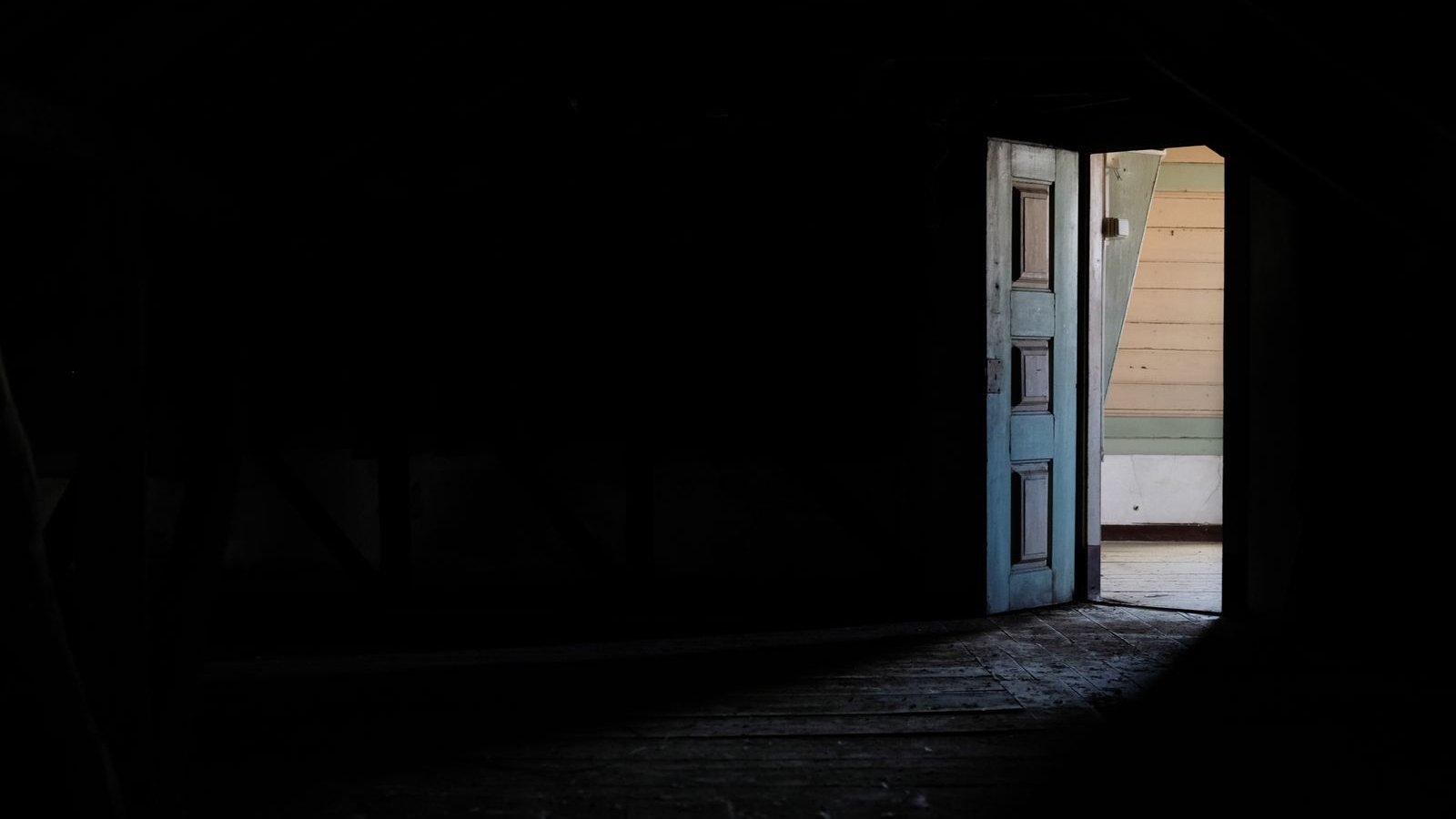
Header photo by Tomás Monteiro on Pexels.
More GM tips

GM Tip
Give the Darkness Teeth
Darkvision pulled its teeth. Here's how to put them back.
October 10, 2026 · 7 min read
GM Tip
It's About Sending a Message
Players play the game you teach them, not the one you describe.
October 2, 2026 · 6 min read
GM Tip
Every Room Has Neighbors
The question a full GM brain forgets to ask.
September 29, 2026 · 6 min read