Build the Dread
Horror is a feeling. Words can't carry it alone, so put it in their hands.
By Blaine · · 4 min read
Greetings all,
This is part three of our October horror run. We gave the darkness its teeth back, then wrote the story itself. I promised that this week we'd take over the room. We will. But first, why.
Read a horror story at noon, at the kitchen table, with music on. Now read the same story at midnight, alone, in a quiet house. Same words. The second time, the house creaks, somehow at the perfect moment, and you feel it in your chest.
That feeling is the whole point of horror. And it's the hardest thing to make happen at a game table.
Horror is a feeling
Horror games are hard. Horror adventures are hard. The key to horror isn't the monster or the gore. It's the emotion: the anxiety, the dread of what's coming.
Words alone struggle to carry that. Movies struggle too, and they have every tool there is. I rarely feel real dread watching a horror movie, because I'm separated from it. It's happening to them, over there, on a screen.
What movies can't give you is something physical. That's something we can bring to the table.
Steal their d20
In a normal game, the excitement is rolling that d20 you picked out and seeing the result. Your die, your roll, your moment.
13 Omens takes that away on purpose. You don't get to choose your die. You reach into a bag and draw blind, and those dice can lead to your character's injury or death.
Sometimes the Storyteller hands you one. Most of the time, though, you draw it yourself, and that's what makes it worse. Your hand went into the bag and came out with it. Whether it ends well or badly, you picked your fate.
Then you roll, and you hope they come up over the number of the Act you're in. The dread is in your hand before the roll even happens.
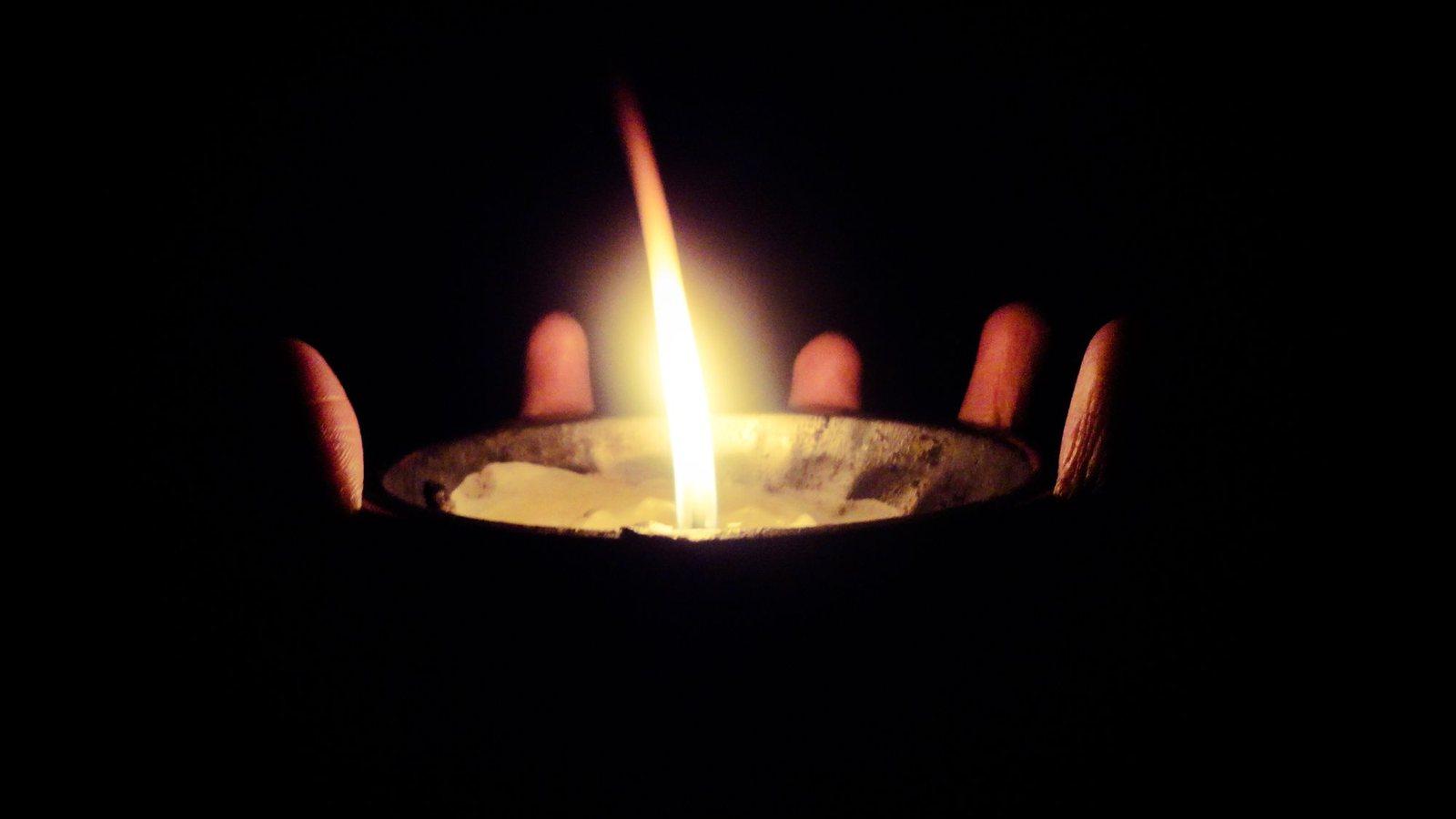
Other horror games are built on the same idea. In Ten Candles, you play by the light of real candles, and every failed roll snuffs one out. The room really gets darker. In Dread, the whole table shares one Jenga tower. You pull blocks to attempt anything risky, and if the tower falls on your pull, your character is out. Every pull is a decision you make with your own hands, and everyone's watching.
You don't need their mechanics
You can borrow the feeling in any game. Build tension outside the rules.
Do the characters need to reach into a hole in the wall? Make a small prop out of cardboard and have the player put their hand in it. Do they need to reach into a bucket of blood to find a key? That's another prop. Please don't use real blood. A covered bucket of cold water works, since they can't see what's in it anyway, or cold, wet spaghetti if you're feeling mean. Skip the food coloring unless you want red hands at the table.
Your players know there's nothing in the box. Their hands don't.
Don't overdo it. One or two in a session is plenty. The point is to give the real people at the table a little of the anxiety their characters are feeling.
Take over the room
Now go back to the creaking house.
Dim the lights. Not pitch black, just enough that the corners of the room go soft.
Skip the uplifting soundtrack. Play something low, or almost nothing at all: a quiet track that might only be the sound of boards creaking every once in a while. Silence does a lot of the work. Let it.
Then let the room join in. The house will creak at the perfect moment. It always does.
Your voice is part of the room
The loudest thing at the table is you. How you talk changes how players feel the game.
If I talk at my normal speed, or fast, a scene feels like any other scene. When I take my time, pace out the lines and drop my voice a little, the same scene lands completely differently.
Slow down and drop your voice. Leave space between the lines, and let the silence after them do some of the work.
And you don't need a performer's voice to do it. Even pacing alone changes how a scene lands. You don't need to be Matt Mercer. A lot of people are scared to GM, or even to play, because they've watched the pros and think that's the bar. It isn't. Your table doesn't need Matt. It needs you.
Don't be Matt. Be you.
Build the dread
Horror isn't something you can describe into a player. You build it in their hands and in the room. Give them a die they didn't choose, then let the quiet do the rest.
See you at the table.
A new GM tip goes up here every Friday.
Header photo by Janice Seelan on Pexels.