Fantasy · Nimble · 5e · Rules-light
Nimble Core Rules Review
Initiative that hands out actions, attacks with no roll to hit, and an Assess action that makes skills matter in a fight. Our read-through of the Nimble Core Rules, the fast 5e alternative from Nimble Co.
From Nimble Co.
- Format
- Hardcover, PDF
- Pages
- 56
- Price
- $75 for the three core hardcovers (sold out), $49.99 for all three PDFs
- Type
- Rulebooks
- Best for
- 5e players who want faster fights and would rather spend mana than count spell slots
Joe no score/20Was on a side quest.
Setting not scored: The Core Rules have no setting. Nimble's setting is in the GM's Guide.
Read-through: we read this cover to cover but haven't run a session with it yet. Scores reflect the book, not how it plays.
Filed under rulebooks and starter sets. How we score
What works
- Initiative sets how many actions you get in the first round
- No roll to hit: a 1 misses, and max damage explodes
- Assess makes skills matter in a fight
- Actions can span turns, so big spells don't need a perfect turn
- One line of Adventuring Motivation instead of a backstory
- Short, fast and gorgeous to read
What doesn't
- Skill checks are pass or fail, with no extra effect for rolling well
- You need the Heroes book to make a character
- The optional rules are spread through the book
Not an affiliate link. We don't earn anything from it.
Nimble is the fastest take on 5e I've read. Initiative hands out actions instead of turn order, you don't roll to hit, and an Assess action makes your skills matter in a fight. It keeps one thing from 5e that I can't stand, but the rest is short and gorgeous.
What I reviewed
I'd heard about Nimble a few times recently. People kept saying how great it is, and how it's the better version of 5e. I'm not a 5e fan, so I had to check it out. The core books were sold out on Nimble's site, but the Monsters & More Kickstarter had a late pledge with the core books as add-ons. I backed it and got the PDFs.
This review covers the Core Rules 3.2 PDF, 56 pages. The classes are in their own book, Heroes, so this one is just the rules. It's a read-through. I haven't run it yet. Heroes and the GM's Guide get their own reviews.
Rules17/20
Nimble trims the fat from 5e. There are four stats instead of six: Strength, Dexterity, Intelligence and Will. Strength covers Constitution, and Will blends Wisdom and Charisma. There are 10 skills instead of D&D's 18, like Might, Naturecraft and Stealth. Less for players to worry about makes sense for a game called Nimble. I'm not sure the broader stats and skills will lose anything, and I suspect once you play you won't even notice. I've never seen a player complain about getting to play.
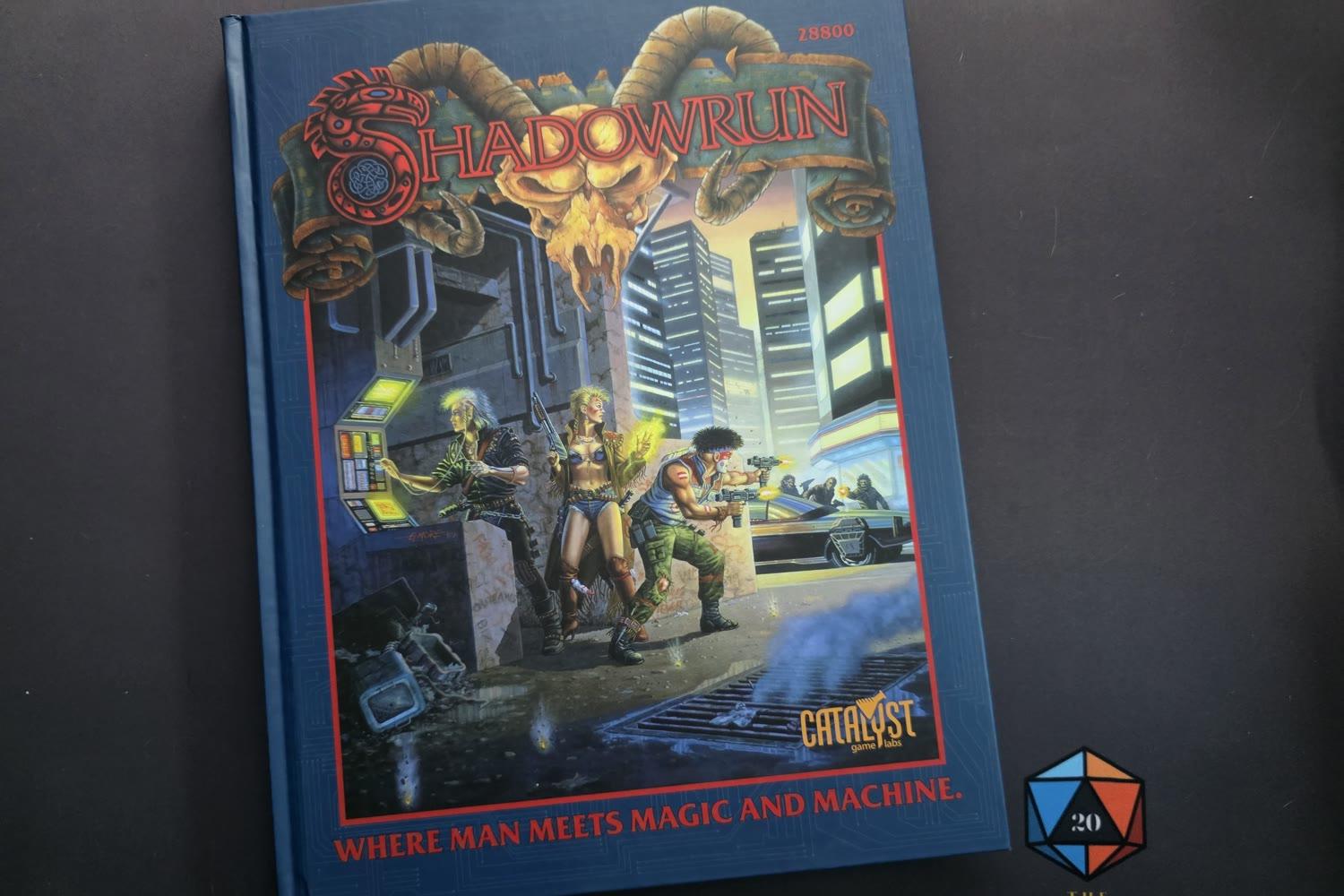
Skill checks are a d20 plus your skill against a DC from about 8 to 20, which makes them easy to set as a GM. A 1 always fails and a 20 always succeeds. That's it, though. There are no extra effects for beating the DC by a lot. My players love crits on skill checks, and I've grown to love systems like Shadowrun: Anarchy 2.0, where extra hits turn into extra effects. Nimble doesn't have that.
Initiative is one of my favorite things in the book. You don't roll to see who goes first. You roll d20 plus DEX to see how many actions you get in the first round: one on a single digit, two on double digits, and all three on a 20 or higher. Heroes generally go first and monsters go last.
Attacks are just as simple. You don't roll to hit. You roll damage, and a 1 on the Primary Die (the leftmost die) is a miss. Anything else hits. Roll the max and it explodes: roll it again and add it, as many times as you keep rolling the max. Attack more than once in a turn and each extra attack gets cumulative disadvantage, much like Pathfinder, so it pays to use your actions for something else. Nimble gives you plenty:
- Assess is a DC 10 skill check with three options. Ask the GM a question about an enemy's weaknesses or abilities. Create an Opening, which bumps the next Primary Die against that target one face higher, so that attack can't miss. Or Anticipate Danger, which drops every Primary Die against you one face lower, so you can't be crit. You can't Assess with the same skill twice in an encounter, because the monsters adapt.
- Defend is a reaction that reduces the damage from an attack by your Defense. I love armor that reduces damage.
- Actions can span turns. A wizard with one action left can start a three-action spell and finish it next turn.
Hiding is one of the simplest systems I've ever seen. With cover, spend an action on a DC 10 Stealth check, and most enemies go after more threatening targets instead of looking for you. Grappling, which is a mess in most games, is one action and a DC 10 Might or Finesse check against a creature your size or smaller. The 13 conditions fit on one page.
Dropping to 0 HP doesn't knock you out. You're Dying, but you can still act with one action. Take damage while Dying and you take more Wounds, and at 6 Wounds you die. I already house-rule something like this in Pathfinder.
Then there's advantage. Nimble kept it: roll one extra die and drop the lowest, or the highest for disadvantage. It stacks, and since your attack roll is your damage roll, it works on damage dice. I loathe this kind of advantage, and I'd have loved to see something different. I understand why it's there. Nimble wants to be a better 5e that feels familiar to players coming over. That's my taste, but it cost Rules a point.
Spells run on mana, and most can be upcast for more effect or damage. I'll take mana over spell slots any day. You can cast any spell from the schools you have access to, up to your tier. Most schools have two cantrips and one spell per tier, and the tier is the mana cost.
Minions are the cannon fodder, like in Draw Steel and other modern games. They're handled as a group. Any damage drops one, a big hit can spill over onto the others, and they attack as a group, so one Defend covers the whole pack. They make players feel powerful with almost no bookkeeping for the GM.
Resting comes in two kinds. Field Rests (Catch Breath or Make Camp) heal less. A Safe Rest at an inn, or somewhere the GM says is safe, is the only way to heal Wounds. I like that. It creates urgency to find safety when things get rough.
Making a character takes two pages. Pick one of three stat arrays, then put your points into skills. Inventory is 10 + STR slots, and items take one or two, with small things grouped together. I like inventory management when it's easy, and slots make it easy. Nobody's counting pounds like in old AD&D, but players still have to decide what to drop to carry the treasure.
There are a ton of ancestries, each with a special feature and a short paragraph instead of a page of lore. Backgrounds are the same. You can feel the book wanting to get you to the game. My favorite small touch is Adventuring Motivation: pick one line for why your hero adventures. Unless you're on Critical Role, an eight-page backstory with your family lineage is more than most GMs will read, let alone weave in. One line works just as well, and the rest grows out of play.
A few more things I liked:
- Anyone can use any weapon, but you can't crit with one you aren't proficient in. Wearing armor you aren't proficient in makes Defend cost an extra action.
- Dual wielding gives you advantage on one attack per round.
- There's no darkvision. You need light to see.
- Anyone who can read a scroll's language can use it, so you'll need to note what language every scroll is in. Fun for some groups, annoying for others. Wands work for anyone too, with an Arcana check if you aren't proficient.
- Every wand has its own way to recharge. The Wand of Fire Step: "Heat the wand in a blacksmith's forge until it glows, then quench it in oil."
Optional rules show up throughout, and the book ends with a few more: playing gridless, abstract distances, and inspiration dice. I'd probably use the inspiration dice, though the system may be simple enough without them.
Layout19/20
The art is absolutely gorgeous, woven into the pages and in full-page pieces. The book is extremely easy to read, much easier than Mörk Borg. It's short enough that it doesn't need a full index. Everything is where you'd look for it, with page references throughout. True to its name, it's a fast read.
My one gripe is the optional rules. They're spread through the book, and I'd rather have them in one place.
Nimble splits the player rules, the classes and the GM material into three books. I like that, but it does mean you can't play from this one alone.
Value19/20
The three core hardcovers (Core Rules, Heroes and the GM's Guide) are $75 on Nimble's site, about $25 a book. They're sold out right now, which is why I went through the late pledge. The PDFs of all three are $49.99, about $17 a book, and they're in stock. The basic rules are free on Nimble's site, too, so you can try it before you buy. You do need Heroes to make a character, so plan on more than this one book.
Who it's for
5e players who want faster fights and fewer rules, and spellcasters who'd rather spend mana than count spell slots. If you like D&D, a lot of it will feel familiar, with all the fat cut off. If you want crits on skill checks, look elsewhere, or homebrew them in. I would.
The verdict
A Hit. Initiative is my favorite rule in the book, attacks are as simple as it gets, and Assess is a rule I'd steal for other games. The book is short and beautiful. It keeps the advantage system I can't stand, and skill checks are pass or fail, but if you want 5e to move faster, this is the book to read.
Update, November 25: we talked with Evan Diaz, Nimble's creator, about the design calls behind it, from the 300 hours he spent on the monster builder to why there's no roll to hit. Read and watch the interview.
Not an affiliate link. We don't earn anything from it.